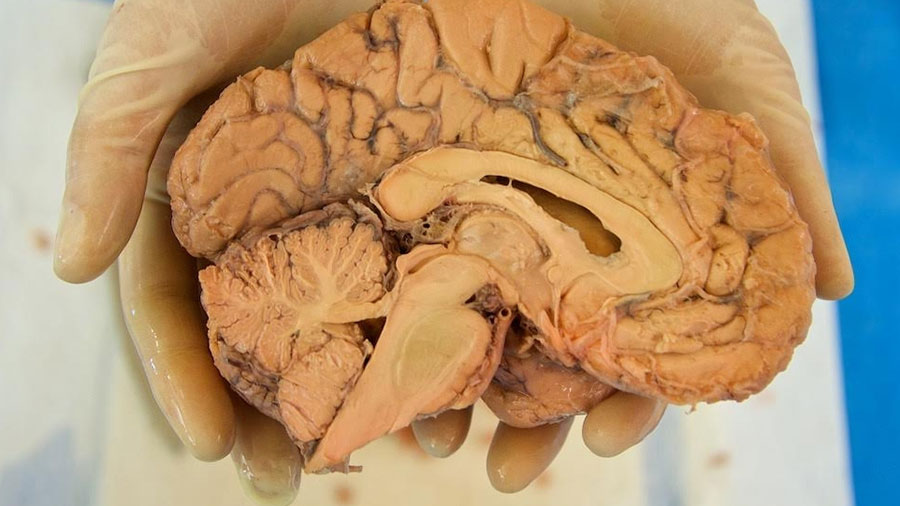
The brain is the most powerful instrument of nature and is unmatched in its complexity. The suffering it can inflict is also unmatched in its severity. Relief or cure will be difficult to reach until we know how the brain works and how it shapes our mental lives. The research in our lab is focused on the amygdala, a central knot in the tangle of brain circuits that control emotions. Abnormal activity in the amygdala plays a pivotal, and often even a causal role, in numerous mental disorders.
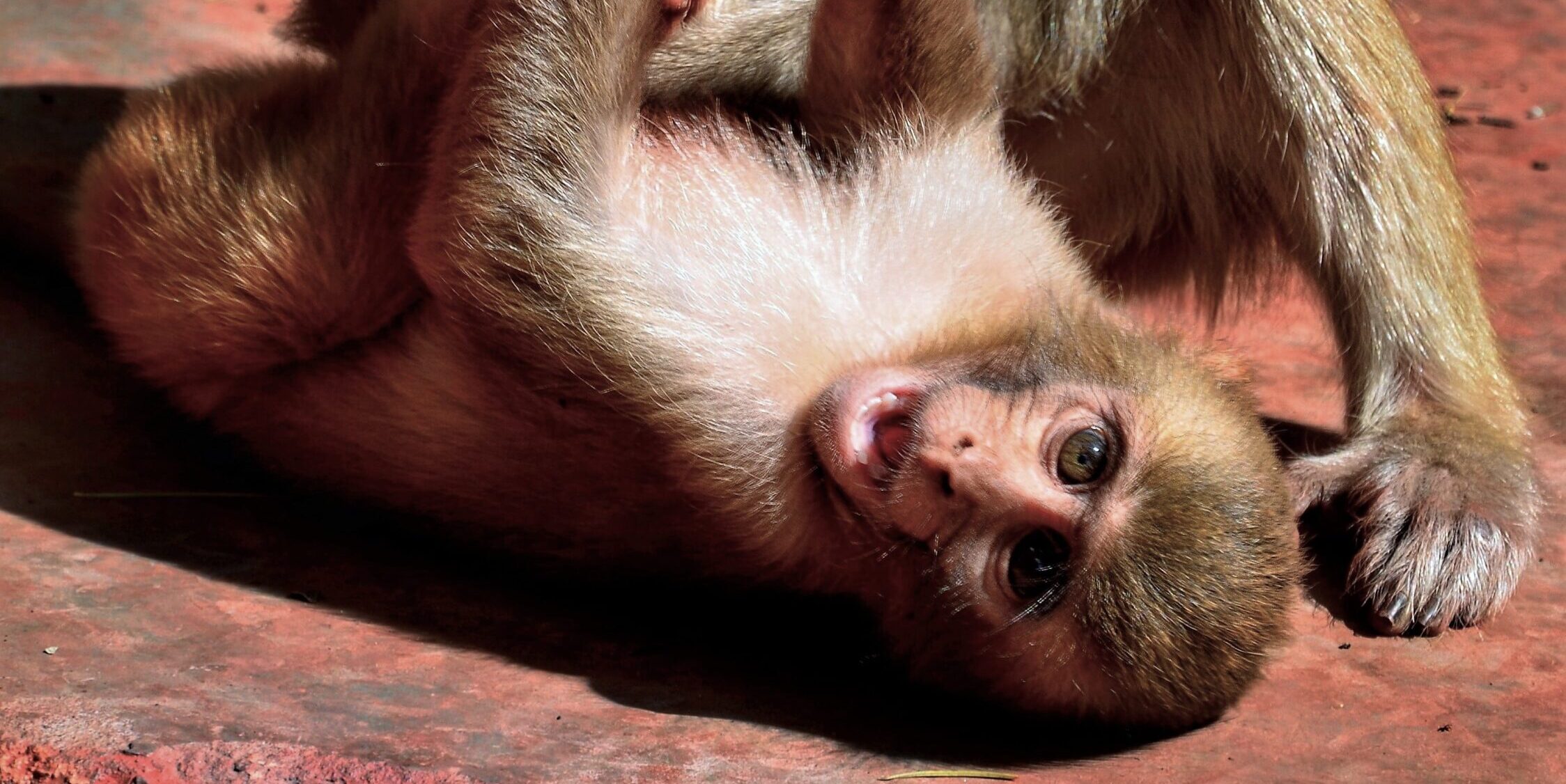
In both health and disease, the amygdala acts like a miniature brain by itself. It processes inputs from all our senses and decides, moment by moment, whether the signals received are good, bad, or neutral. It also decides how our body should respond to emotional events and whether these events should be stored in memory. We study the cellular basis of amygdala function in non-human primates because their emotional processes and social behaviors are quite similar to our own. We take advantage of their natural behaviors including the use of facial expressions and eye contact to engage their social partners, the building of lasting bonds through touch, and their ability to fit into complex, hierarchical societies.
Do interoceptive signals influence higher cognitive processes? We found that the physiological state of the body (which can be manipulated by drugs with peripherally-restricted action) predicts decisions on approach-avoidance conflict tasks. We are expanding these questions into the social domain to determine whether social behavior can be altered by interoceptive afferents.
We are monitoring the eye movements of monkeys while they view dyadic, aggressive-appeasing interaction videos to determine whether interoceptive manipulations alter their scanpaths and their ability to learn a social hierarchy through transitive inference.

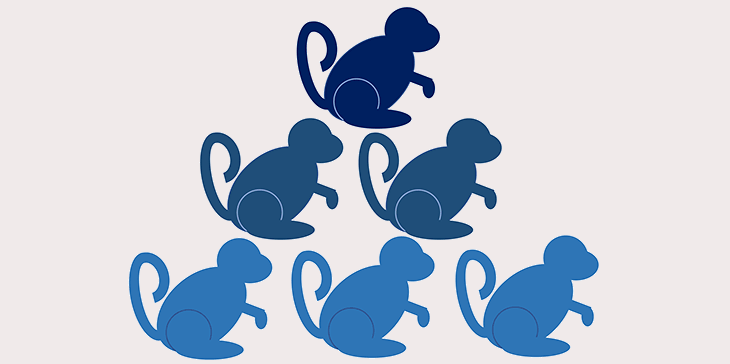
In the absence of explicit indicators, social status can be inferred from observing the signals exchanged between individuals. We simulated social interactions between macaques by juxtaposing videos of aggressive (dominant) and appeasing (subordinate) displays and found that neurons in the amygdala signal – through a latent variable - the status of the dominant or the subordinate animal.
We also examined the local field potentials associated with socially meaningful eye movements in the amygdala and hippocampus of macaques while they watched videos of dominant-subordinate interactions. The timing, frequency, and status-specificity of these power transients reveal a differential contribution of the amygdala and hippocampus to the visual exploration of social scenes.

Adolescence in primates is a protracted period of remodeling in the brain, body, and multiple aspects of the socio-emotional behavior required for successful integration of an individual into society. We have longitudinally documented changes in the physical, hormonal, and behavioral maturation of adolescent macaques in parallel with structural changes in the brain.
While age alone is a poor predictor of adolescent development, increased plasma levels of estradiol predict both increased prosocial behavior and structural differentiation of the amygdalo-prefrontal connections as measured by non-invasive neuroimaging techniques.
Ava Pal joined the Gothard Lab in August 2023 as an intrepid undergrad with an interest in medicine and a curiosity for science. She immediately revealed herself to be a deep thinker and willing to put herself out there, engaging with difficult concepts and even presenting posters early in her career. She was accepted into […]
After a summer of intense data collection and analysis, the Gothard Lab has been presenting results at a variety of different conferences. VISP Networking and Research Symposium From the tail-end of the Gastronauts event at the University of Arizona, a new single-day conference emerged. On October 30th, the Program for Visceral & Interoceptive Systems Physiology […]
Just like adolescent macaques, graduating college students leave the relative familiarity of the university they’ve known for the past four years, and journey out to share their knowledge with new homes as they continue to strive towards their career goals. Undergraduates in the Gothard Lab spend many years working closely with the monkeys to gain […]