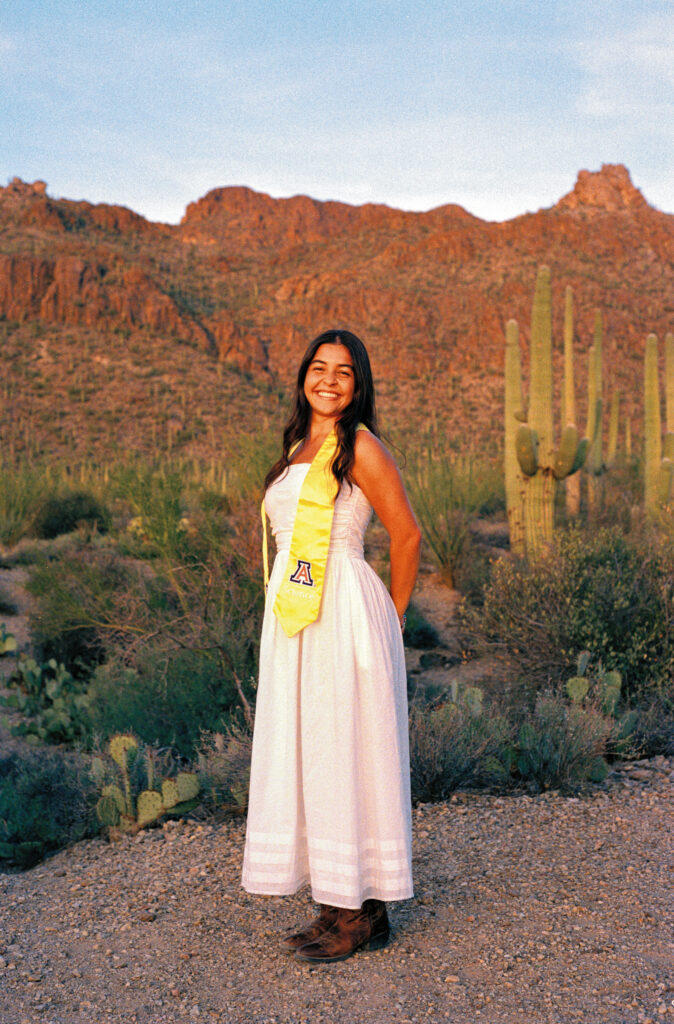
Ava Pal joined the Gothard Lab in August 2023 as an intrepid undergrad with an interest in medicine and a curiosity for science. She immediately revealed herself to be a deep thinker and willing to put herself out there, engaging with difficult concepts and even presenting posters early in her career. She was accepted into the Undergraduate Biological Research Program in 2024.
Ava has experienced every facet of the primate neurophysiology lab, first by training adolescent monkeys on in-cage tasks, then learning how to section brain regions and analyze cortical thickness from MRIs, as well as curating neural firing rates from electrophysiology experiments, ultimately completing her time in the lab with work analyzing behavioral responses to interoceptive manipulations.
Ava has been a picture of resiliency throughout her time in the lab, experiencing setbacks in projects, plus all the frustrations that come when working with both monkeys and computers. During her time with the Gothard Lab, she also found a passion for coding, and completed her degree in Neuroscience and Cognitive Science with minors in Computer Science and Spanish.
Despite graduating and returning to friends and family in other states, Ava will continue to assist on completing data analyses for the Interoceptive project under Michael Cardenas, further bolstering her resume as she plans her future.
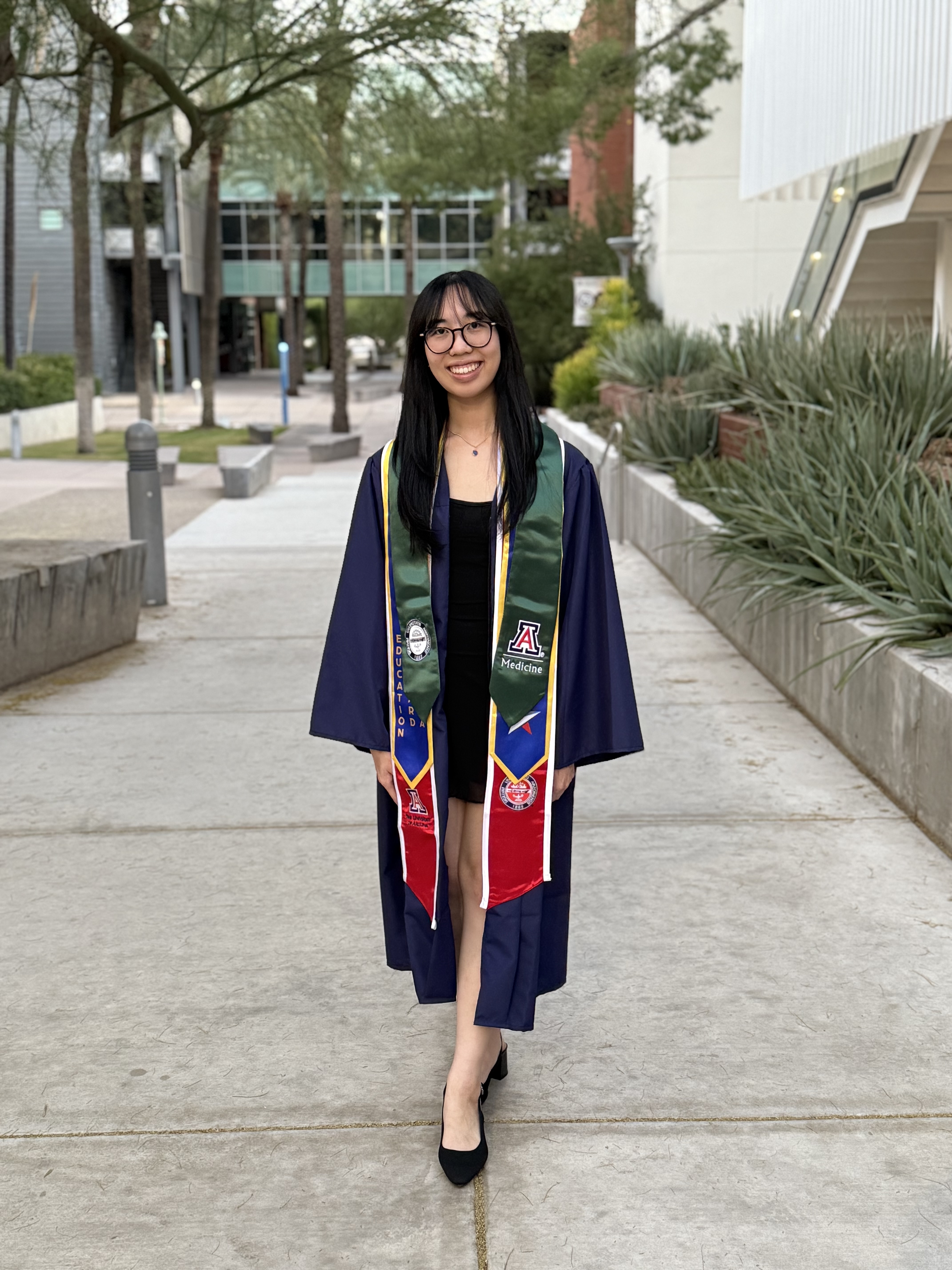
Alison Yaw joined the Gothard lab in January 2024 to learn more about neurophysiology in her journey to medical school. She proved herself to be particularly astute at understanding the minutiae of macaque facial expressions and became an expert in the Macaque Facial Action Coding System (MaqFACS).
Alison spent her years in the lab assisting in the development of a program that could automatically evaluate macaque facial expressions from videos, labeling over 10,000 frames of muscle movement, and analyzing the expressions produced by macaques under experimental conditions. She showed remarkable adaptability when another lab published their work with a complete automatic labeling program and her project required a pivot.
However, her years of knowledge on macaque expressions was not wasted. Through her work, Alison was able to determine the different ways that action units were activated in the most common facial expressions in macaques, and completed an honors thesis titled “Different Facial Action Units Define the Intensity of Macaque Facial Expressions.”
Alison is graduating with a degree in Physiology and a minor in Biochemistry. She was recognized by the university as the Physiology Outstanding Senior for Winter 2025. Of course, the lab knew she was outstanding well before this!
Her work will be well remembered in the lab with her Monkey Codex, a resource in the form of a large colorful poster detailing the activation of AUs in each type of facial expression.
Archer Bowrie began in the Gothard Lab in 2021 with an interest in the circuitry underlying algorithmic behaviors of social and affective processing. He was awarded funding through the NSF GRFP to evaluate how prefrontal-amygdala connections develop during adolescence and drive changes in complex social decision making. Archer set out with a longitudinal plan to complete morphometry, hormonal assays, behavioral tasks involving social development and delayed gratification, and diffusion MRIs.
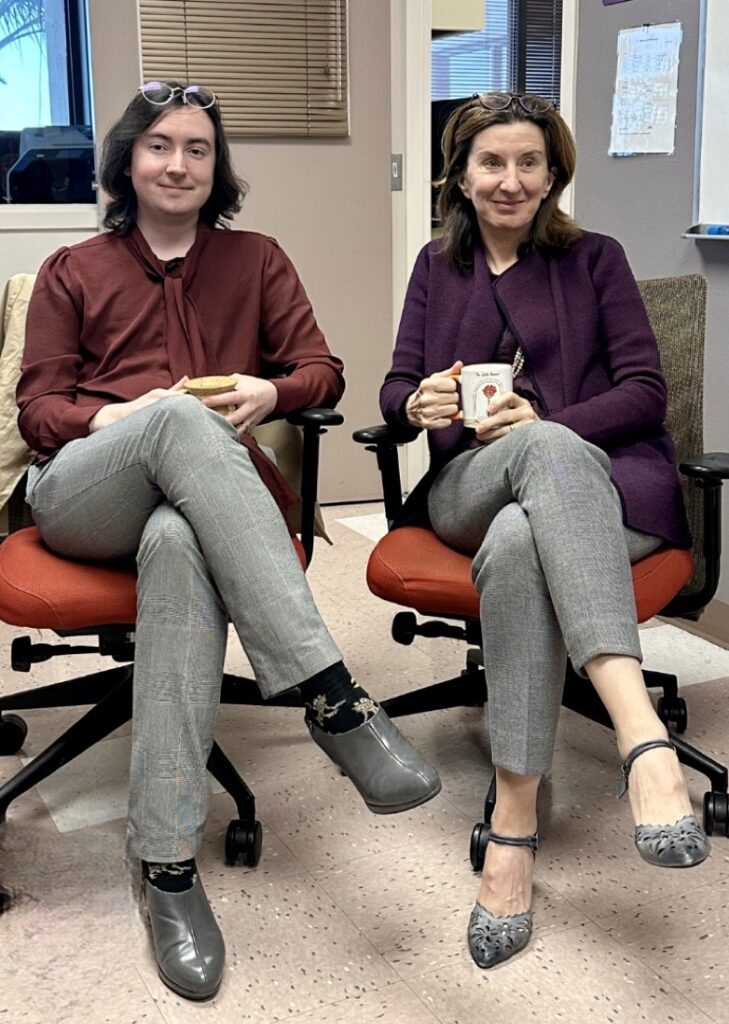
The first step was to build the cohort of animals that would be studied. By 2022, a group of four male monkeys filled the role, dubbed Coco, Peanut, Archibald and Benedict. These monkeys would be Archer’s joy and bane of his existence until the completion of his dissertation in 2025.
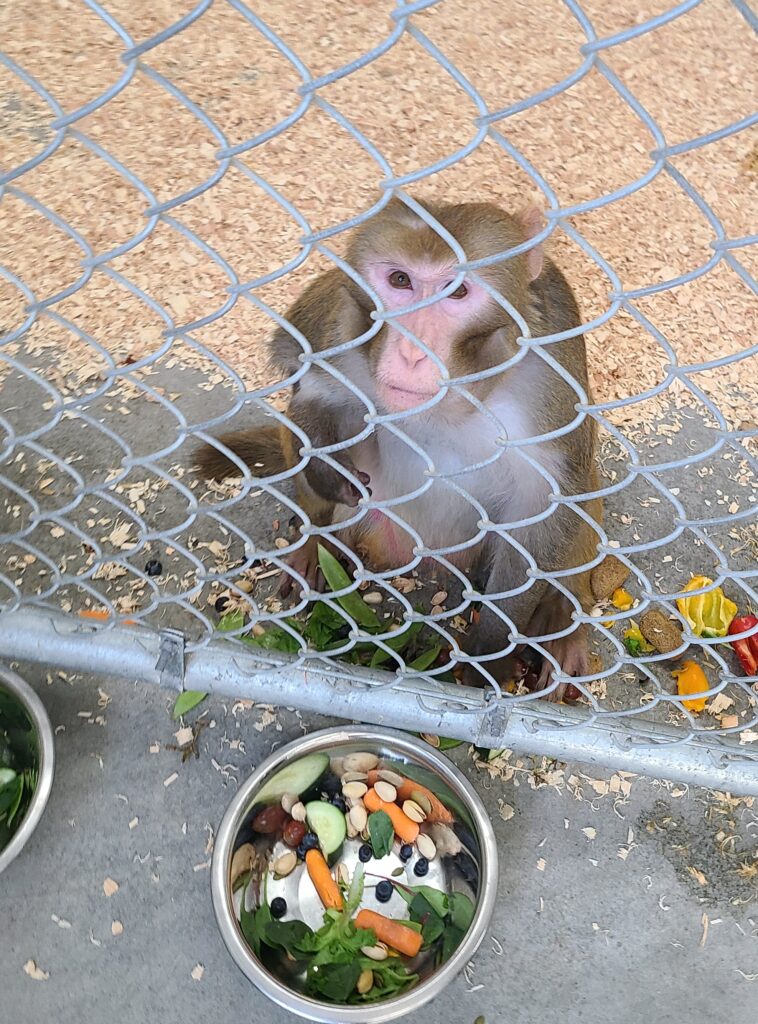
Training a group of monkeys is no simple task, and would require the creation of a team to train the animals, as well as a new apparatus to complete in-cage tasks. But nothing could have been done without Archer spending time with the animals, earning their trust, and teaching them to come touch their little grabby hands to a humans’ for treats. By the time the cohort was rounded out by a younger pair of monkeys, Vanilla and Hazelnut, the lab was proficient at handling the prepubescent monkeys and was able to collect data on them fast and efficiently.
During Archer’s time in the lab, more than 10 undergrads got their start working with monkeys on the Adolescent project. Archer’s work was supported by graduate students within the lab and across the university, collaborators from outside institutions, and an advisor who attempted to provide a guiding hand even when the subjects were novel to her.
Archer defended his dissertation, “Adolescent development of amygdalo-prefrontal circuit microstructure and its role in prosocial behavior of rhesus macaques,” on December 2nd 2025, decked out in appropriate monkey attire - a banana shirt. He detailed how the microstructural changes in the orbitofrontal cortex, amygdala, and anterior cingulate cortex and the white matter connecting them were predicted by developmental measures like age and hormone levels. He reported on the findings that prosocial development has a critical period in the beginning of puberty. Models that included all of the studied regions best predicted the behavioral development of prosociality over adolescence.
While Archer will always be connected to the Gothard Lab, he has begun to plan his next steps and is considering post-doctoral positions to further his knowledge on adolescent development in other primate models like humans.
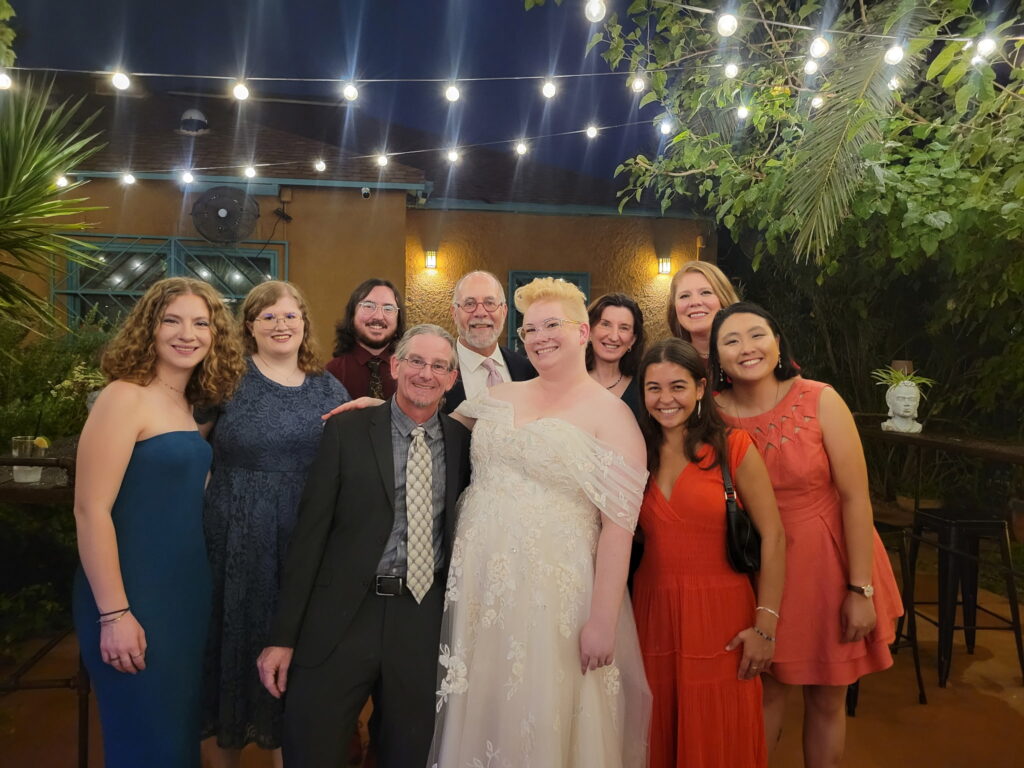
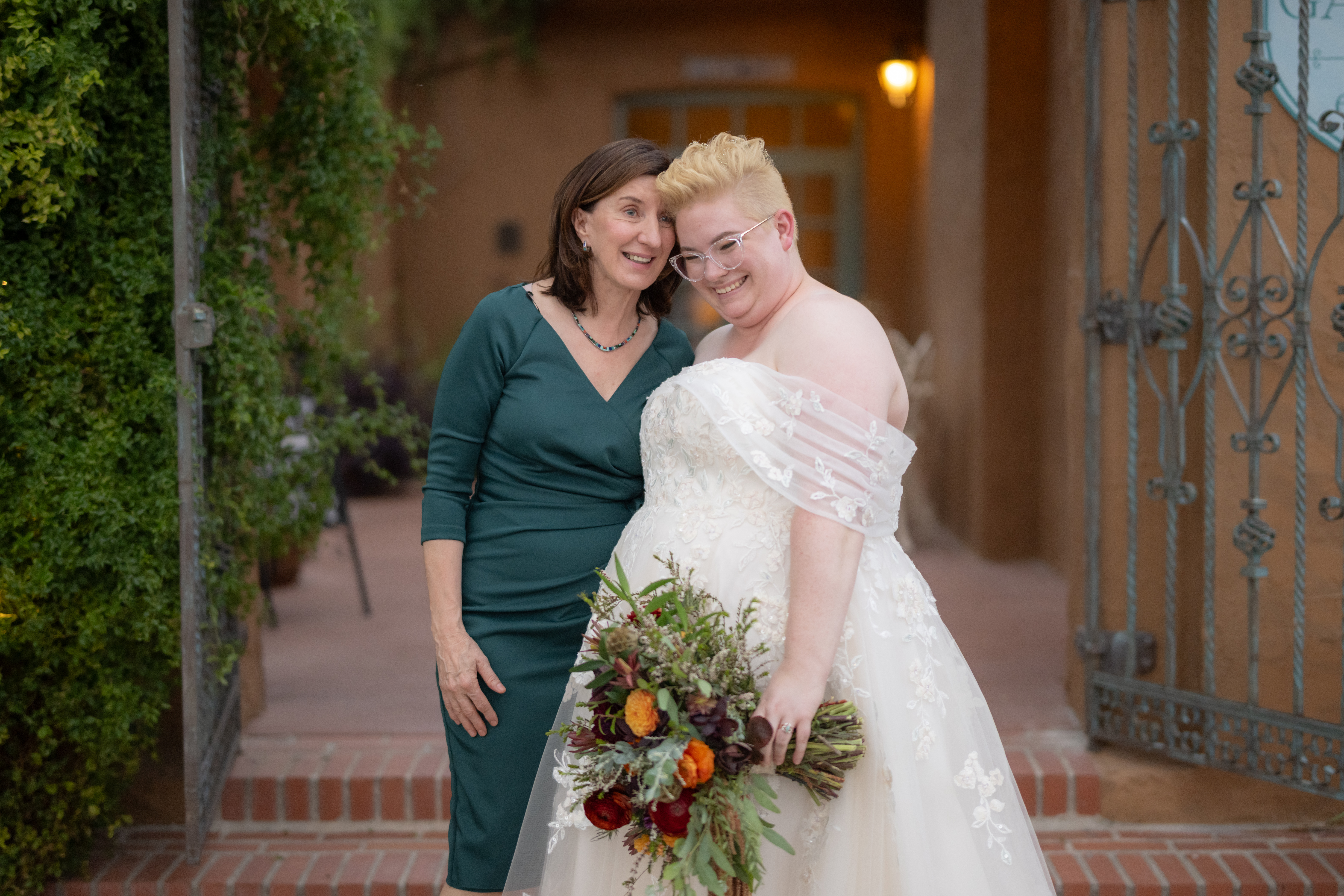
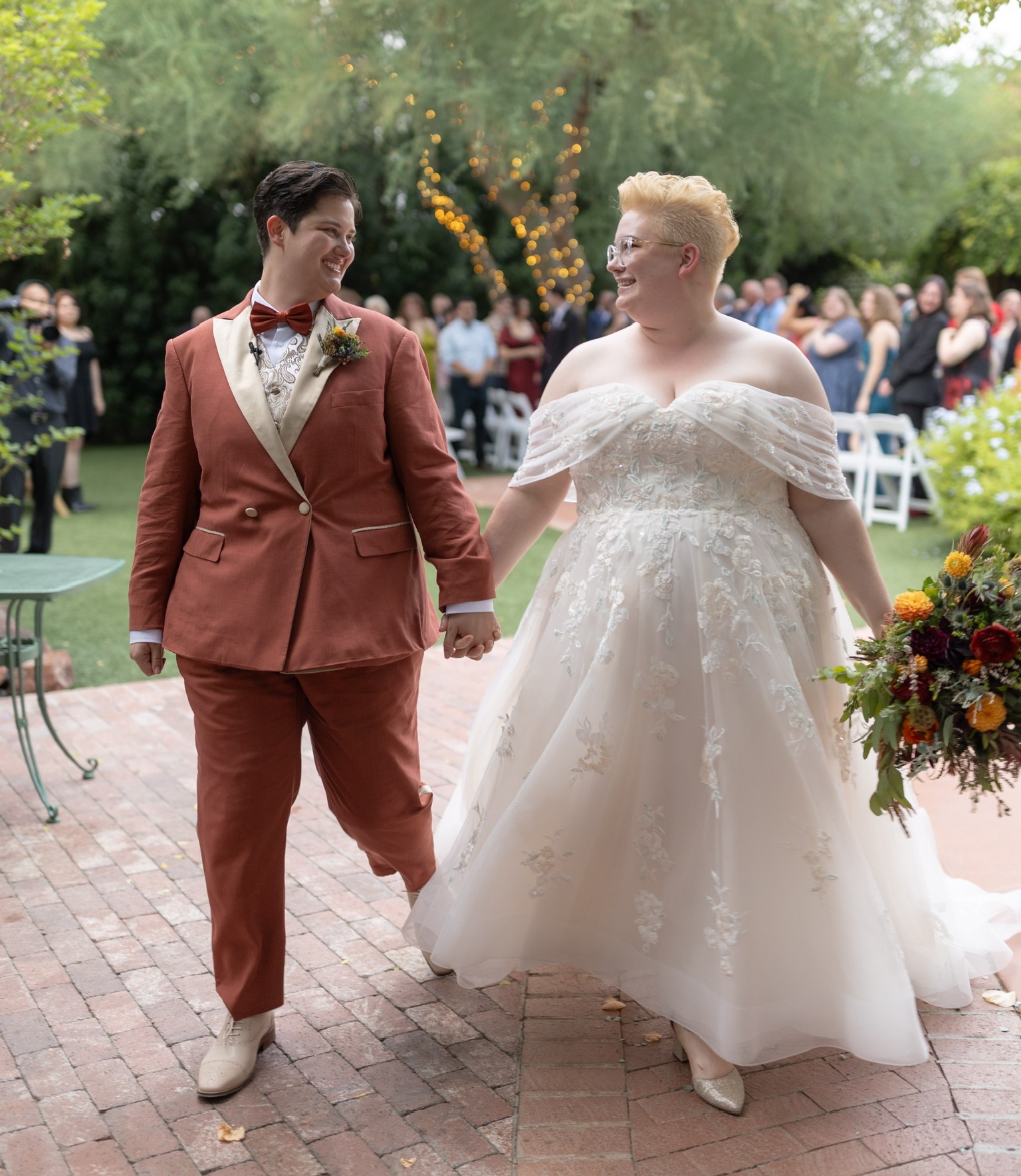
In other lab news, the lab coordinator Alexis decided to forgo the macaque norm of promiscuity and instead pursue the act of mating for life. Her nuptials were carried out surrounded by her own colony of primates.
After a summer of intense data collection and analysis, the Gothard Lab has been presenting results at a variety of different conferences.
VISP Networking and Research Symposium
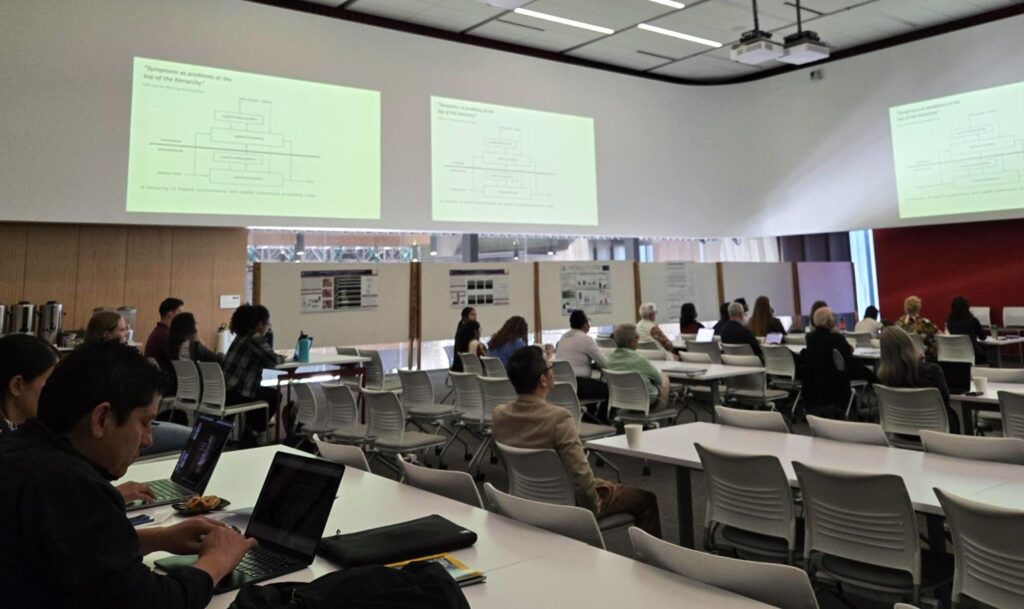
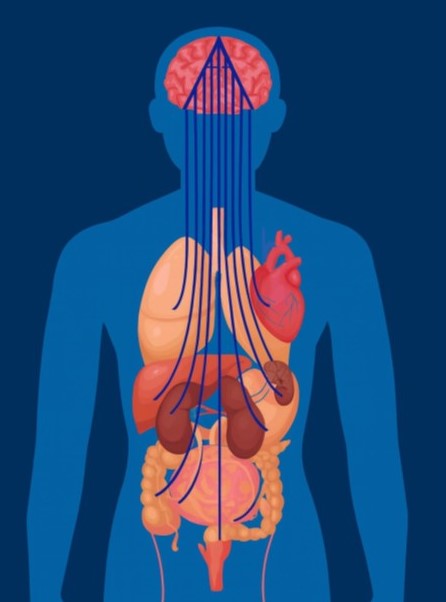
From the tail-end of the Gastronauts event at the University of Arizona, a new single-day conference emerged. On October 30th, the Program for Visceral & Interoceptive Systems Physiology (VISP) held its inaugural symposium. VISP Director and founding member, Dr. Katalin Gothard, organized a full day of networking and research presentations consisting of 10 talks by leading researchers in the field and 11 posters presented by University of Arizona students. Discussions spanned a wide array of topics from the urinary system to hormones to the brain. The goal of VISP is to evaluate how parts of the body interact and communicate to affect behaviors. Research was presented from top universities around the country, from animal models as small as mice, to as large as human beings.
Society for Neuroscience (SfN) Conference
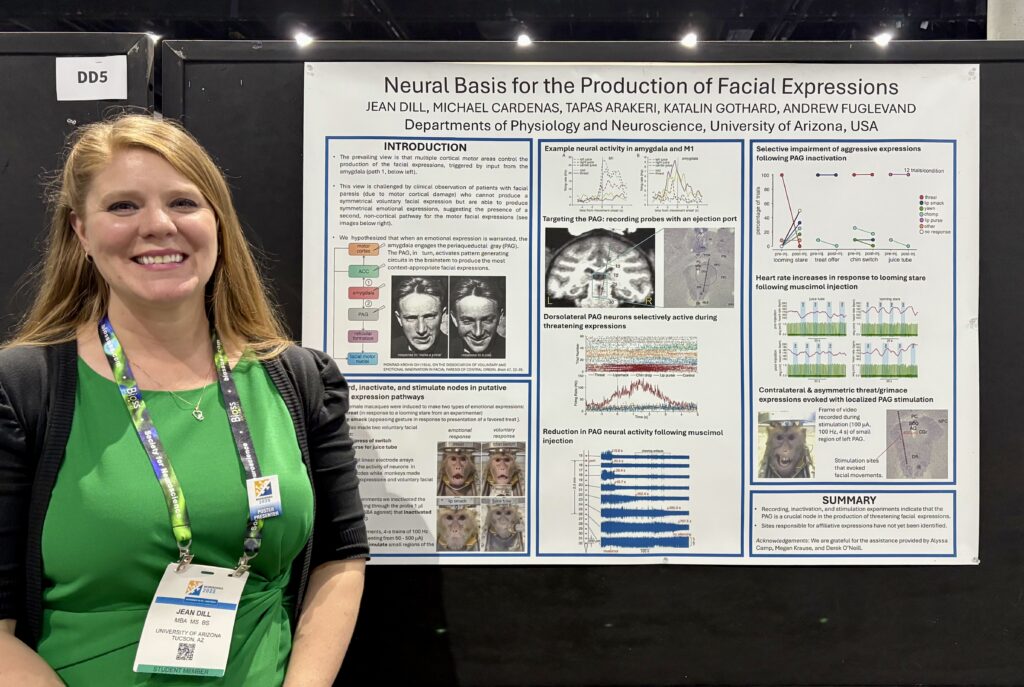
A first for some and a last for others, all staged in a chilly San Diego. This year, the Gothard Lab sent off two posters to the annual SfN conference; one presenting work from the Hierarchy team comprised of Megan Krause and Mackenzie Lynch, and continued work on interoception presented by Ava Pal.
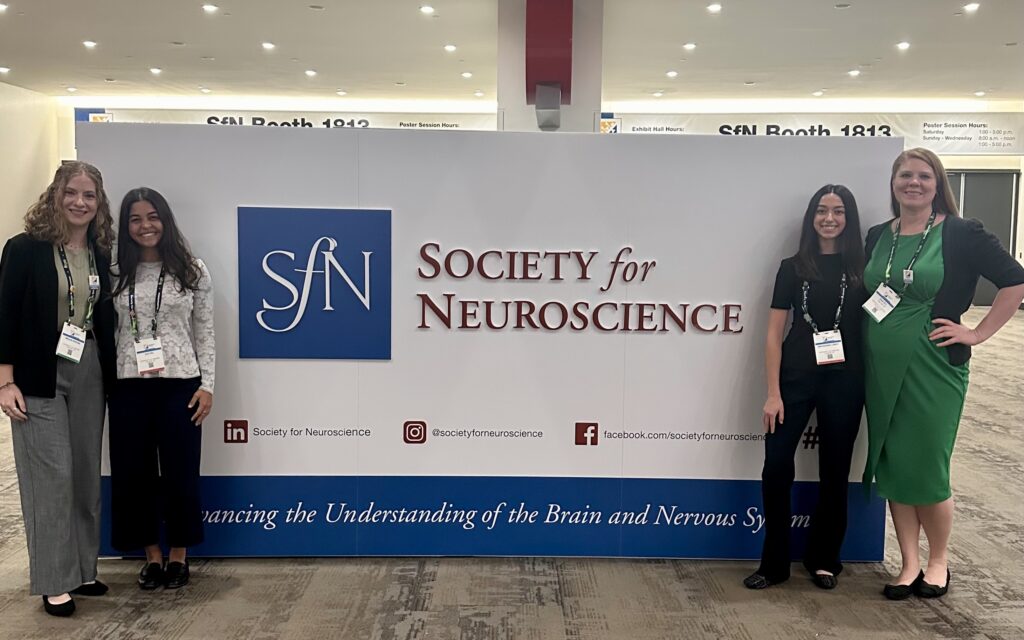
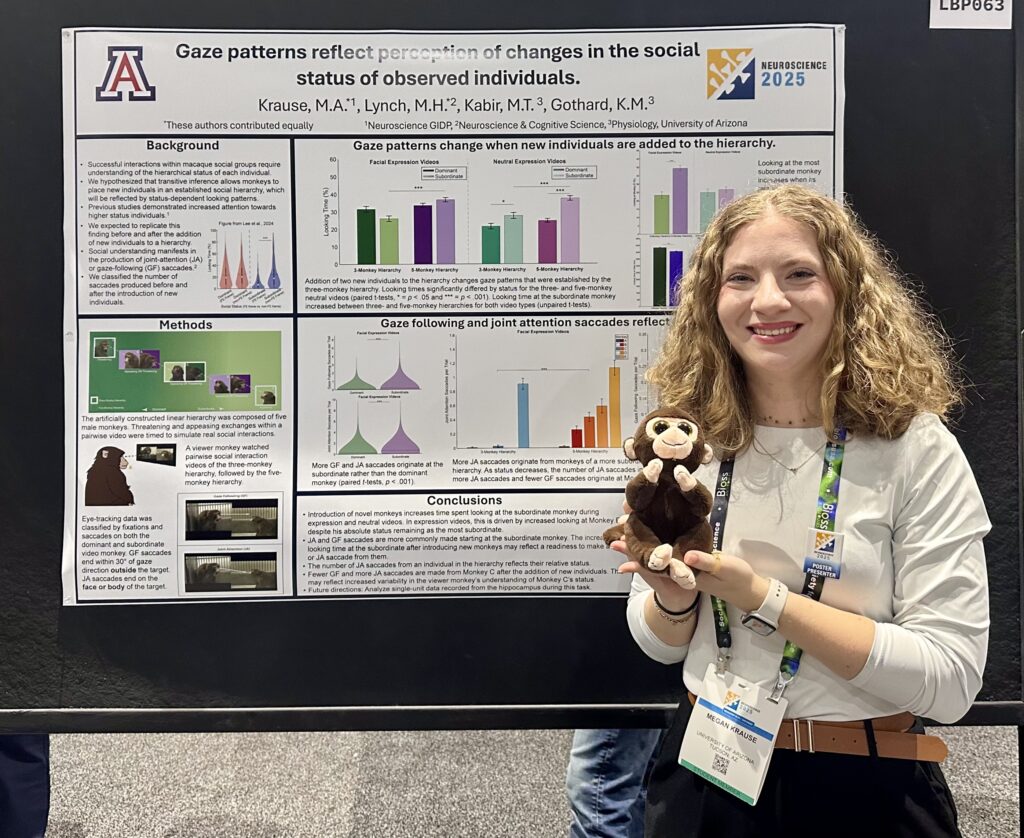
Megan Krause is a first timer at SfN in her new position as graduate student in the Gothard Lab. She presented the outcomes of her shared project with senior undergraduate Mackenzie Lynch. This was Mackenzie’s first and last time at SfN as an undergraduate student, after championing the creation and implementation of a new hierarchy project. Their poster examined changes in monkey looking behavior when new members were added to a known hierarchy.
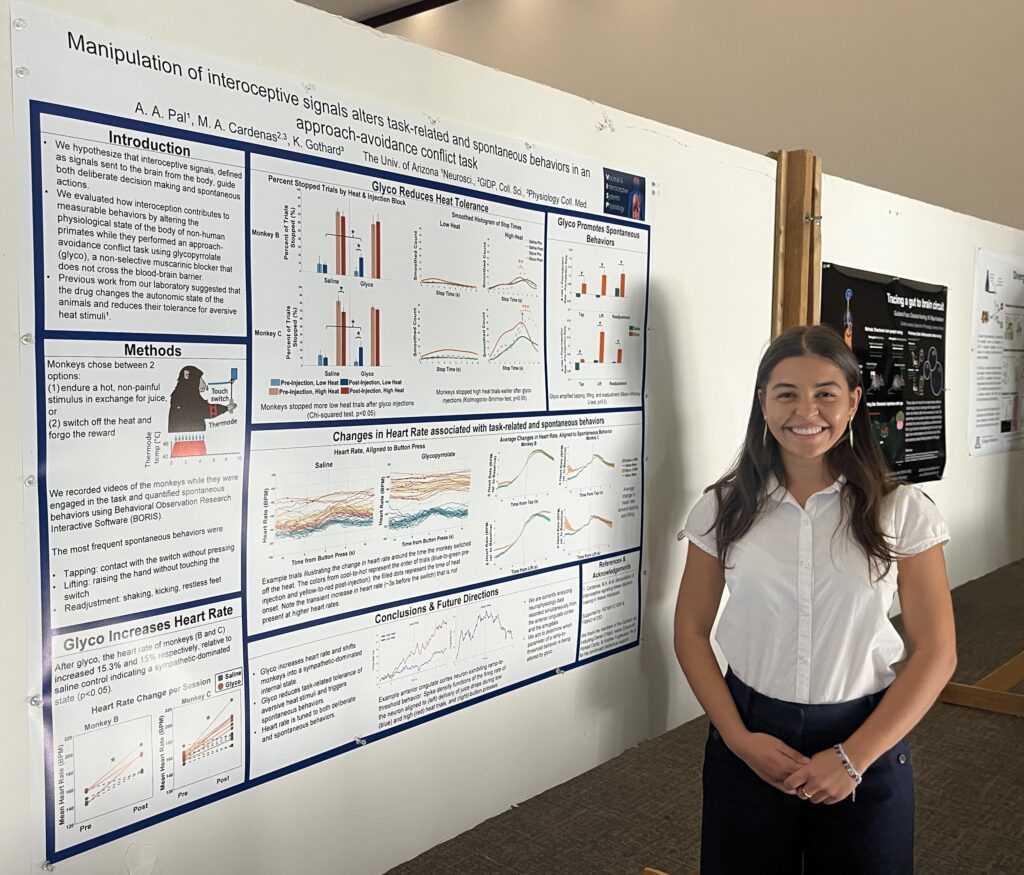
Senior undergraduate Ava Pal completed her last presentation at SfN, and in her undergraduate career, prior to her graduation in December. She has been completing novel analysis on the behaviors monkeys exhibit during an approach-avoidance task and how these align with heart rate and neural firing.
U of A Student Research Day
Cameron Bolles began in the Gothard Lab as an undergraduate way back in 2021. Now, as an MD/PhD student at the U of A, he returned to complete his first rotation while also balancing the difficulties of med school.
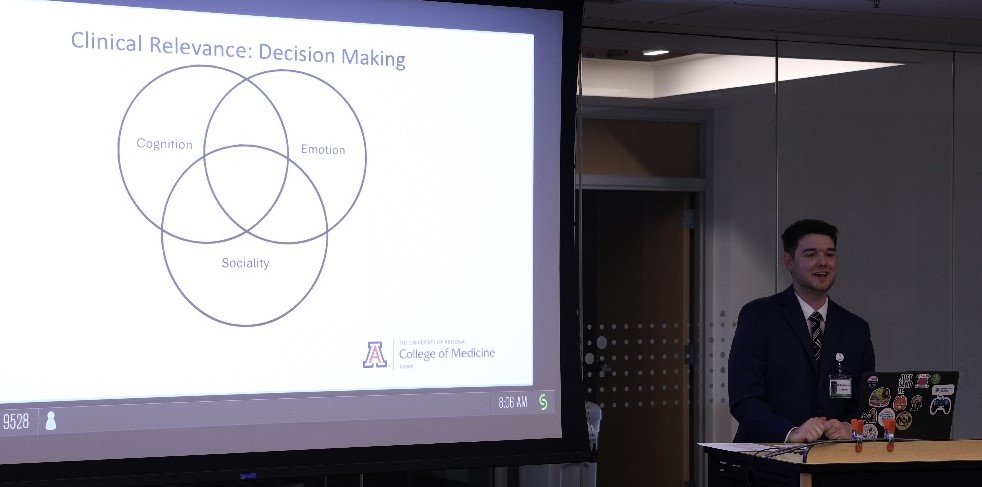
What started out as a four week project, evaluating monkeys’ performance on learning a Delayed Match to Sample task, has become a more thorough evaluation of how memory develops during a Non-Match to Sample Task when interoceptive signals are changed using pharmacological manipulations. The task is in early data collection and supported by many undergrads learning to work with monkeys for the first time.
STAR Seminar Presentation: “Neural Basis of Facial Expressions”
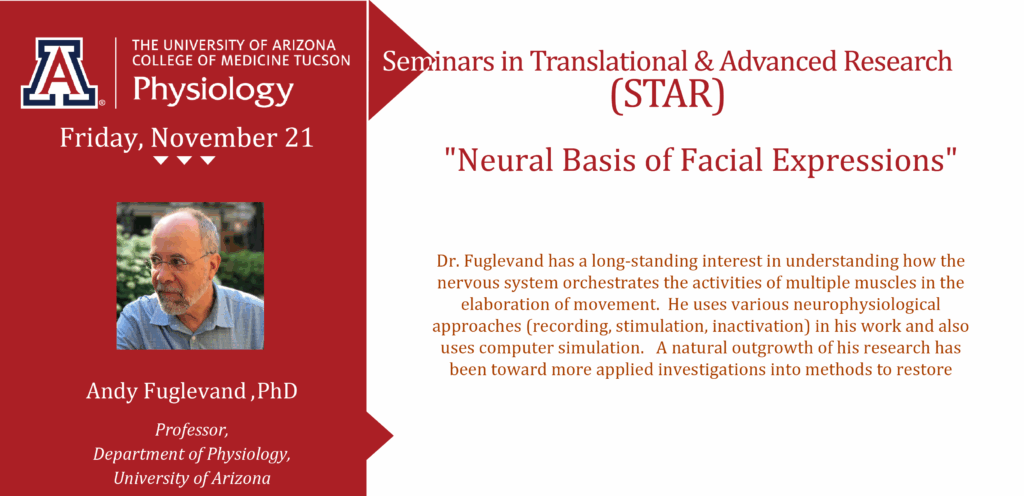
Long-time collaborator Dr. Andrew Fuglevand presented at the U of A Seminars in Translation & Advanced Research (STAR) in November. He has partnered with Dr. Gothard to investigate the pathways that control emotionally driven facial expressions This work involves recording from, inactivating, and stimulating several brain regions, including the Periaqueductal Gray (PAG), a region deep in the brainstem involved in other stereotyped innate behaviors.
Just like adolescent macaques, graduating college students leave the relative familiarity of the university they’ve known for the past four years, and journey out to share their knowledge with new homes as they continue to strive towards their career goals.
Undergraduates in the Gothard Lab spend many years working closely with the monkeys to gain their trust and complete the experimental tasks that further our research. Our current cohort of graduates have contributed to projects that studied adolescent behavior on a delay discounting task, the brain’s response to grooming compared to nonsocial touch, how adolescent monkey’s developed prosocially, how interoceptive signals affected choice behaviors in approach-avoidance tasks, how monkeys looked at social interactions, and assisted in the development of stimuli and analysis for multiple tasks.
The Gothard lab has a significantly large band of Bachelor(‘s of Science) leaving the nest in 2025: two students pursuing their PhDs, and three proceeding to veterinary studies. These students dedicated their time, their summers, and even their weekends to the work and have come out the other side ready to meet their future goals.
Where are they off to?
Gabriella Ames, B.S. in Veterinary Sciences - Oregon State University
Olivia Baumann, B.S. in Veterinary Sciences + Minor in Biochemistry - Washington State University
Alijah Howard, B.S. in Veterinary Sciences + Minor in Spanish - Pima Community College
Ryan Le, B.S. in Physiology - University of Chicago
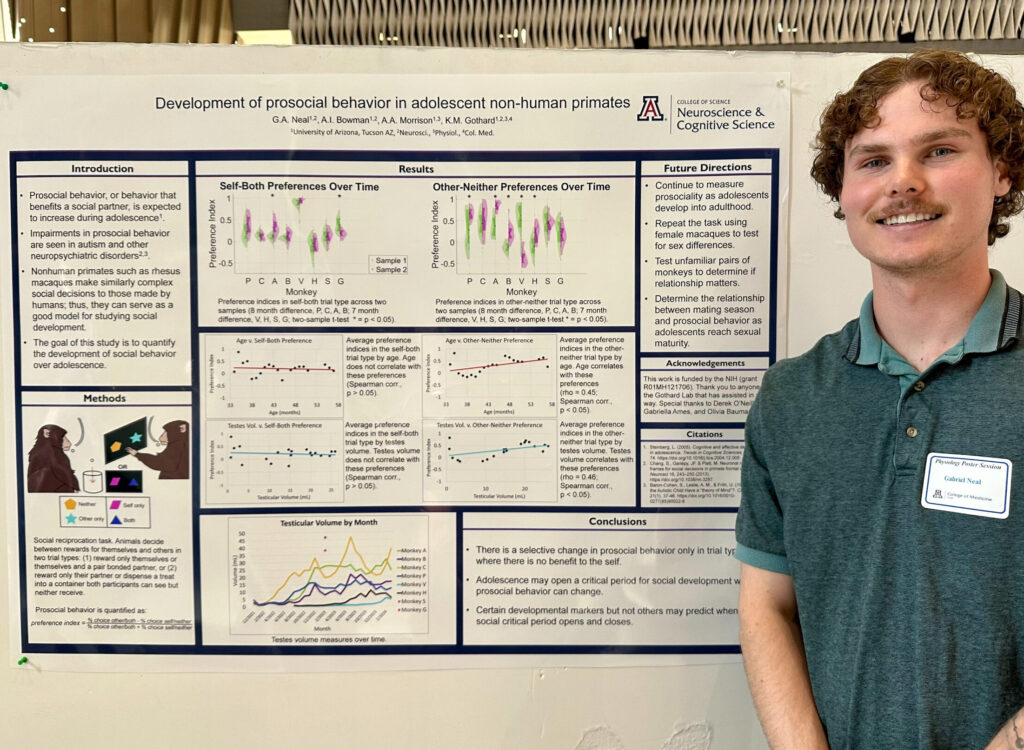
Gabriel Neal, B.S. in Neuroscience and Cognitive Science - University of Pittsburgh
We would also like to extend a special thank you and solemn farewell to our Lab Manager, Derek O’Neill, who has decided to take a break from science after over 20 years in the field of animal research. He has made an indelible impression on the Gothard lab in the past 6 years, and will be missed by all primates, human and nonhuman alike. We wish him luck on all future ventures.
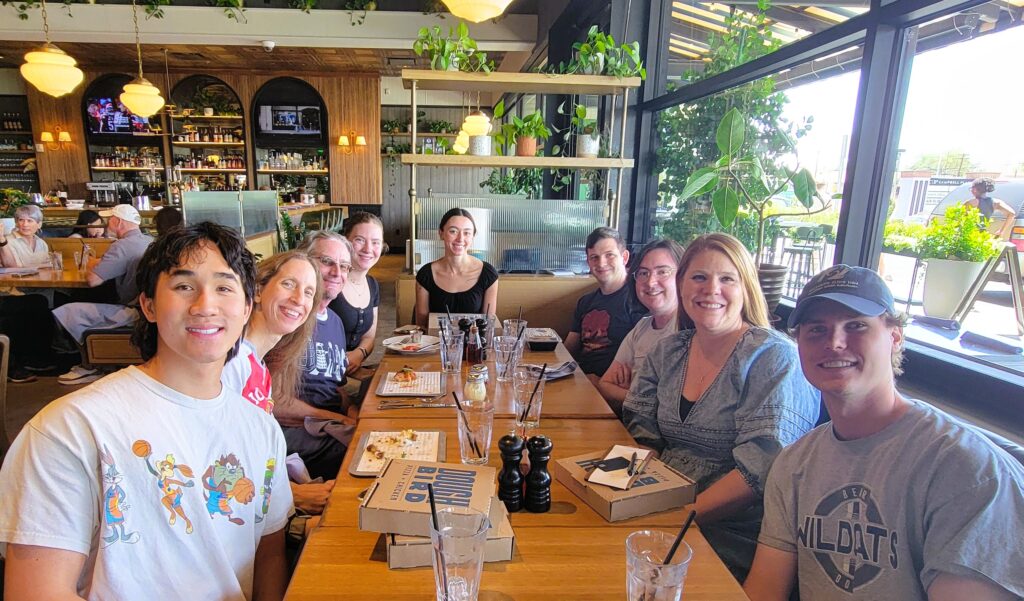
On a cloudy Saturday in January 2025 a collection of minds converged to talk science, specifically of the biological variety. It was the 36th Annual Undergraduate Biological Research Program’s (UBRP) poster conference, and Gothard lab members past and present descended upon ENR2 to support undergraduate research.
There were two representatives from the Gothard lab presenting this year, Ava Pal and Gabriel Neal. Both joined the lab in 2023, and were accepted into UBRP in 2024 to undergo the intensive experience of what it would be like to work full-time in research over 10 weeks of summer.
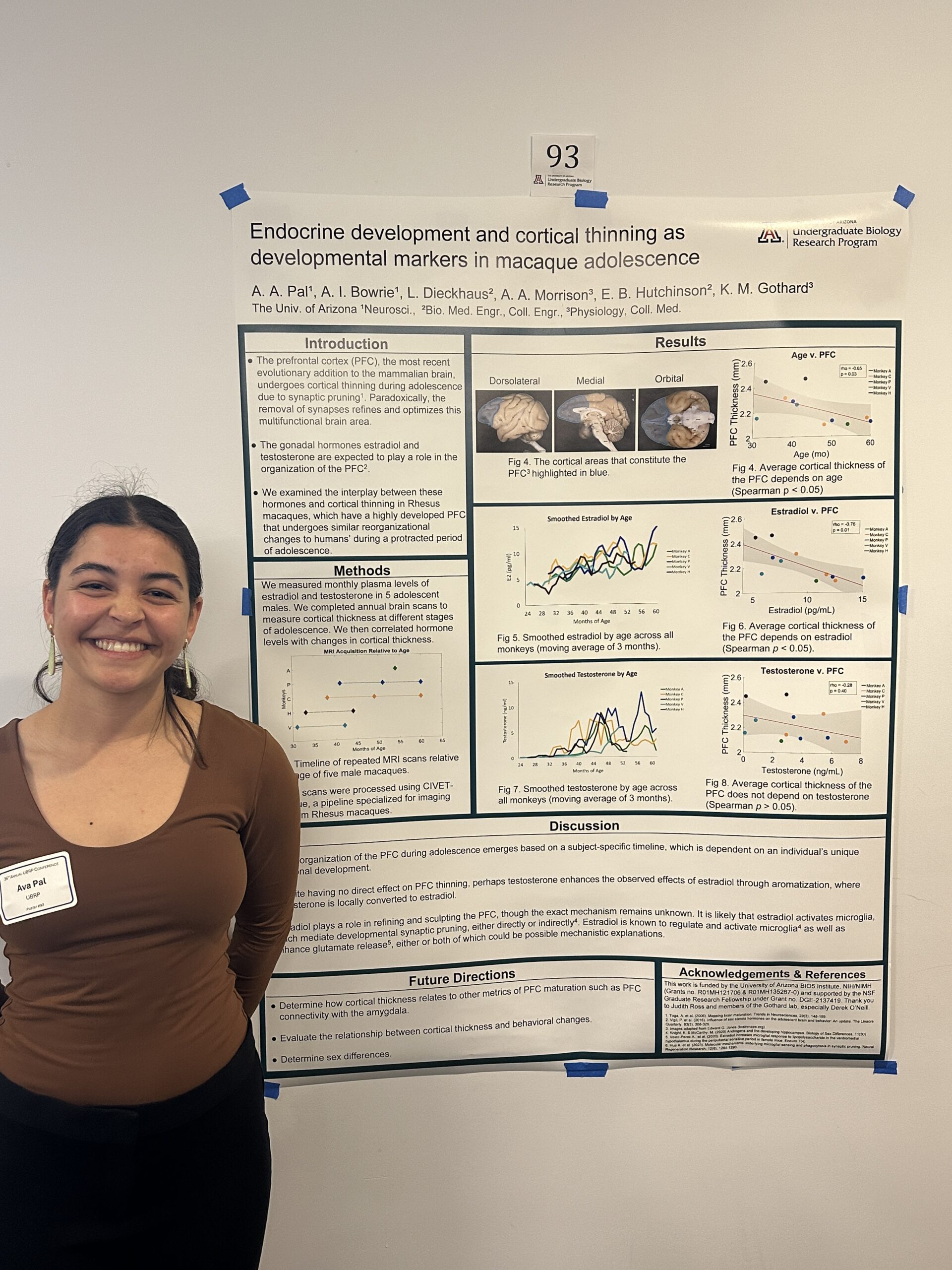
Ava, a junior in the Neuroscience and Cognitive Science (NSCS) major, had a project focused on the changes that occur in the adolescent brain as seen on MRIs, with a particular focus on the prefrontal cortex. In conjunction with MRIs, she also evaluated a cohort of monkey’s development over adolescence as measured by the gonadal hormones, estradiol and testosterone. Ava’s work uncovered a strong relationship between estradiol and the thinning of the cortex, better predicting the amount of thinning than age, while testosterone had no clear relationship. The process behind these connections between hormones and cortex thinning could be due to the process of aromatization, which the lab will continue to evaluate.
Ava is continuing in UBRP with a new project studying how a monkey’s behavior may predict choices on an approach-avoidance task and how this relates to their neural and bodily states.
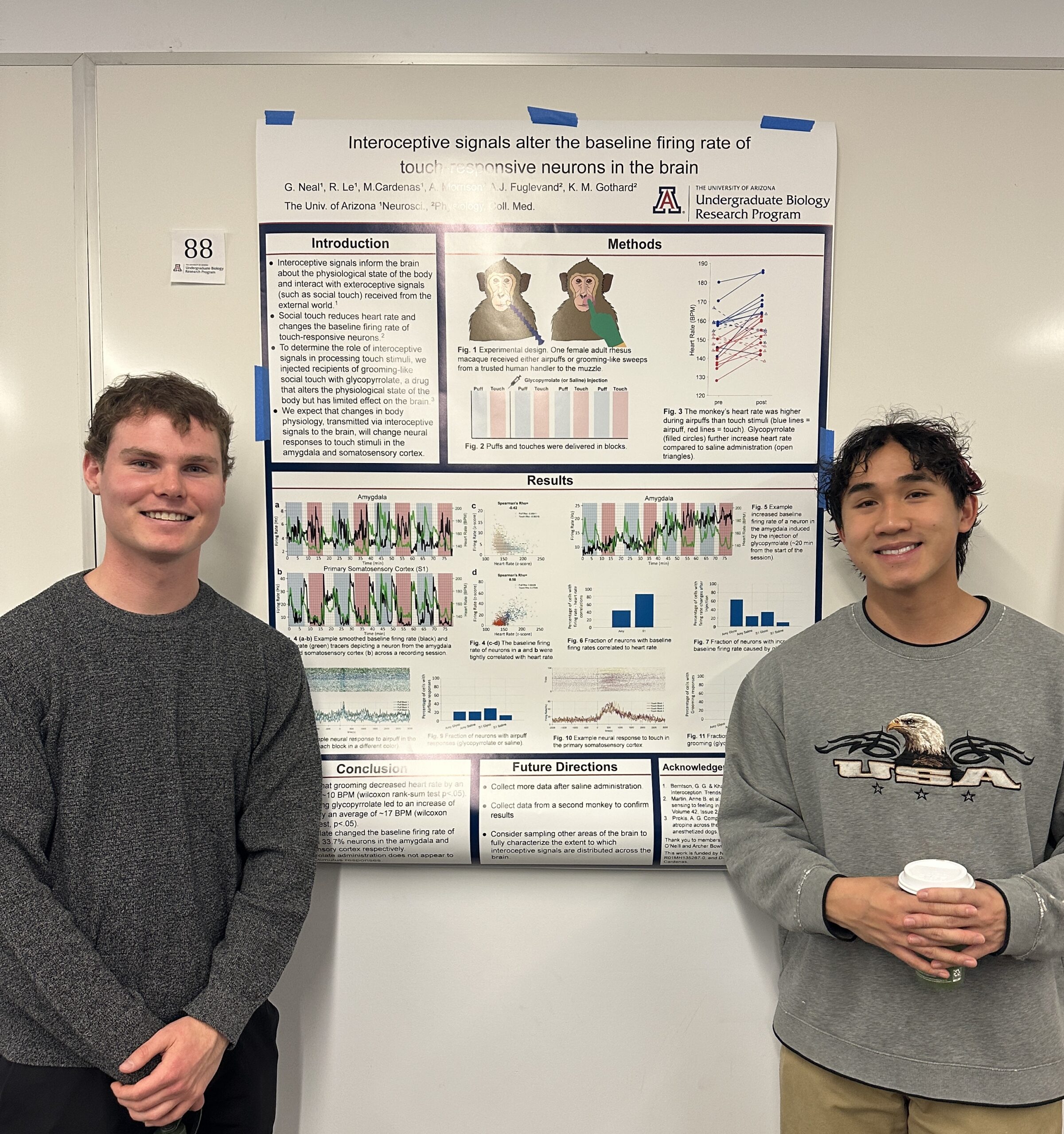
Gabe, a senior in the NSCS major, is one of the few people in the world that can say he pets a monkey on the regular. In his interest in uncovering the connection between the brain and body, and how we can affect interoceptive signals from the body to make changes in the brain, Gabe used a pharmacological manipulation of a tactile experiment. While alternating between puffs of innocuous air or grooming by a trusted human trainer, the monkey was provided a drug that elevated heart rate without crossing the blood-brain barrier. Gabe found that the firing rate of the somatosensory cortex and the amygdala each had a proportion of cells that had baseline firing rate changes related to changes in heart rate. Despite these changes to baseline, there seemed to be no significant effect on the actual response to stimuli.
Gabe is currently attending interviews for graduate school to continue his research as a PhD student. Until he leaves the lab, he will continue to work on the interoceptive project and petting monkeys.
Any average human couldn’t do it. But two rhesus macaques did.
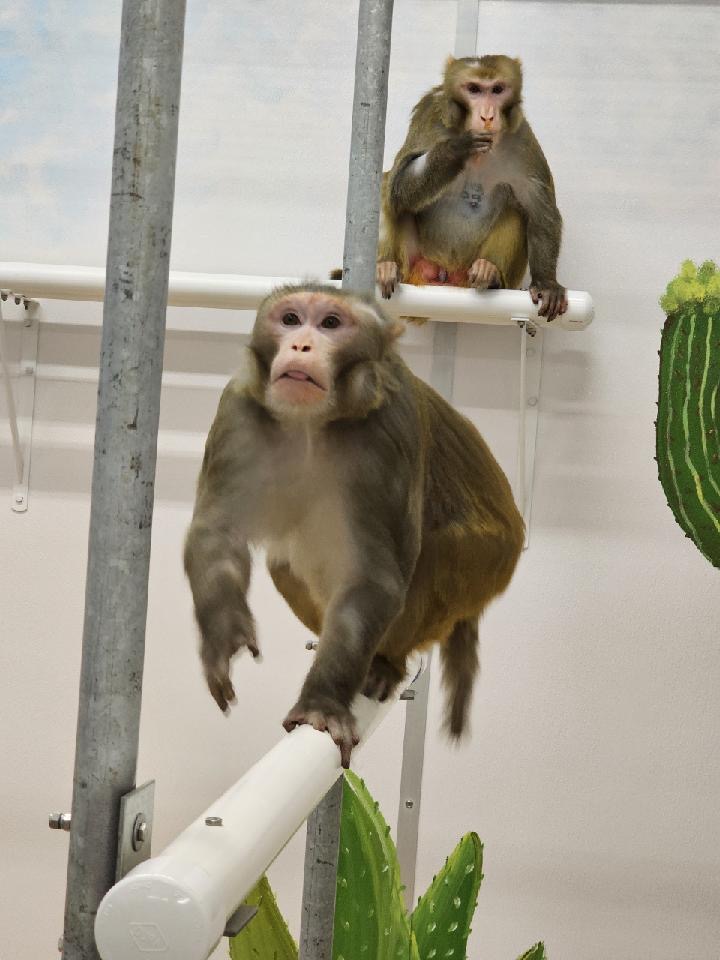
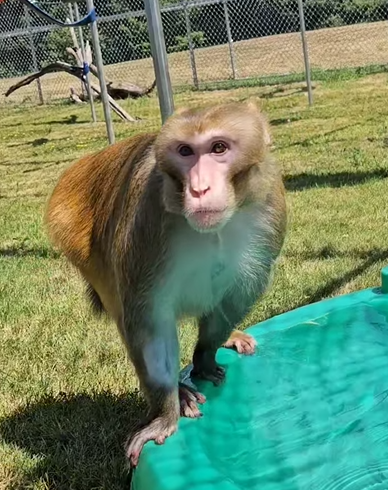
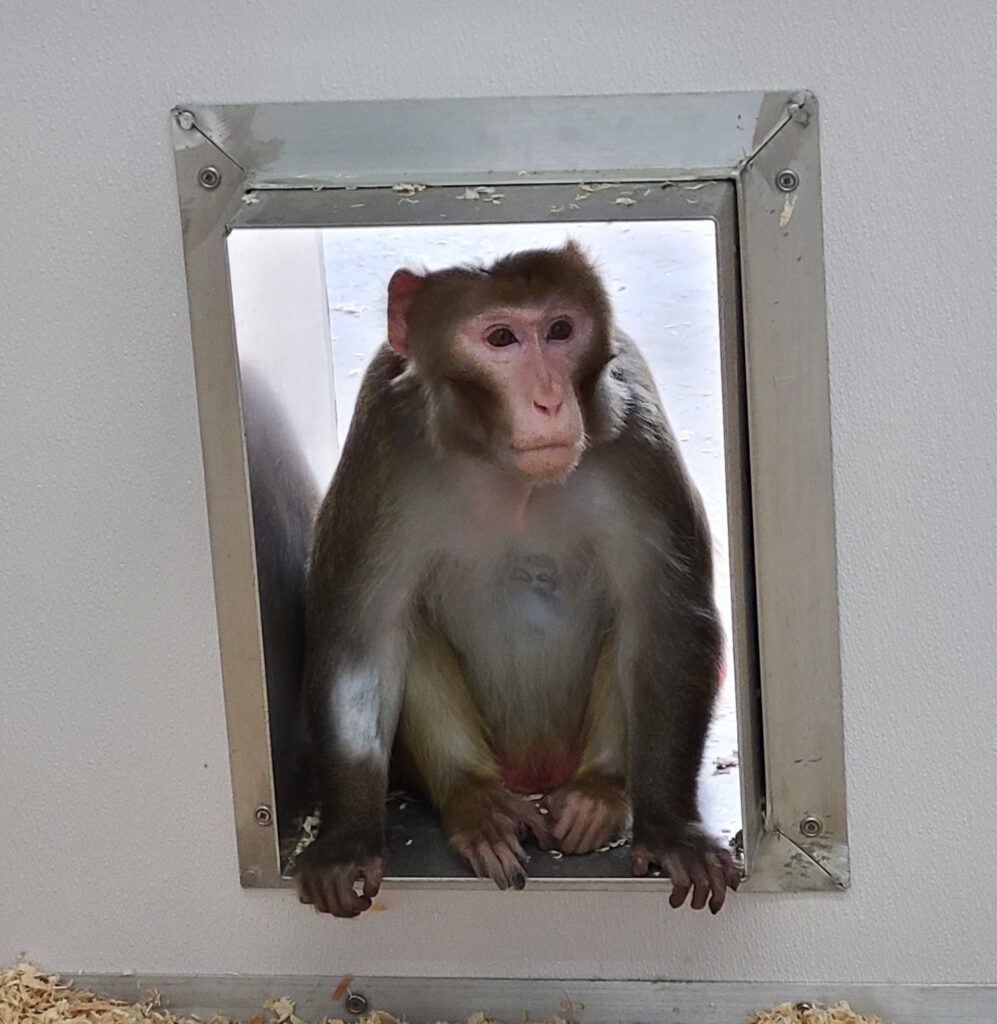
With skills including manipulating humans, moving joysticks, watching videos, and eating treats; monkeys Agave and Saguaro decided they were over the pressure of academic research and headed for retirement in the Pacific Northwest.
They joined the Gothard lab around the age of 5 years old, young macaques ready to take on the world, and quickly became cherished animals with a reputation for learning fast and working hard. Each shared in their own trials and tribulations while working at the University of Arizona, including troubleshooting various tasks with grad students and rowdy teenagers being introduced to their colony, but eventually they became the top of the hierarchy.
Saguaro was food motivated, with a favorite treat being marshmallows, which he would just about do anything for. Agave may look a little silly with his large canines and always hanging out tongue, but he is fast at video games and enjoys Disney movies with his preferred organic apple juice. They both participated in work on interoception, social behavior, and were model adult controls for the adolescent project.
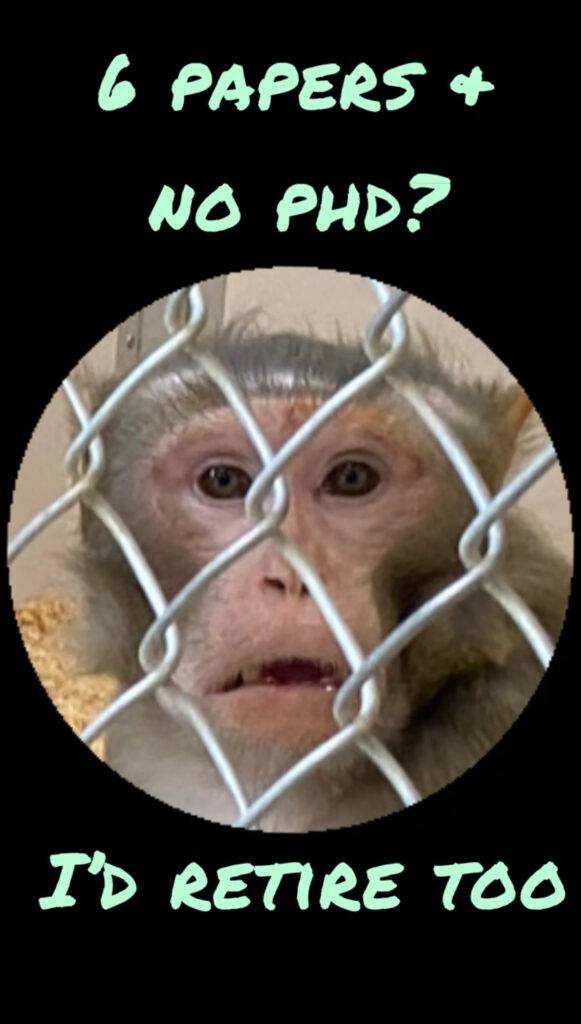
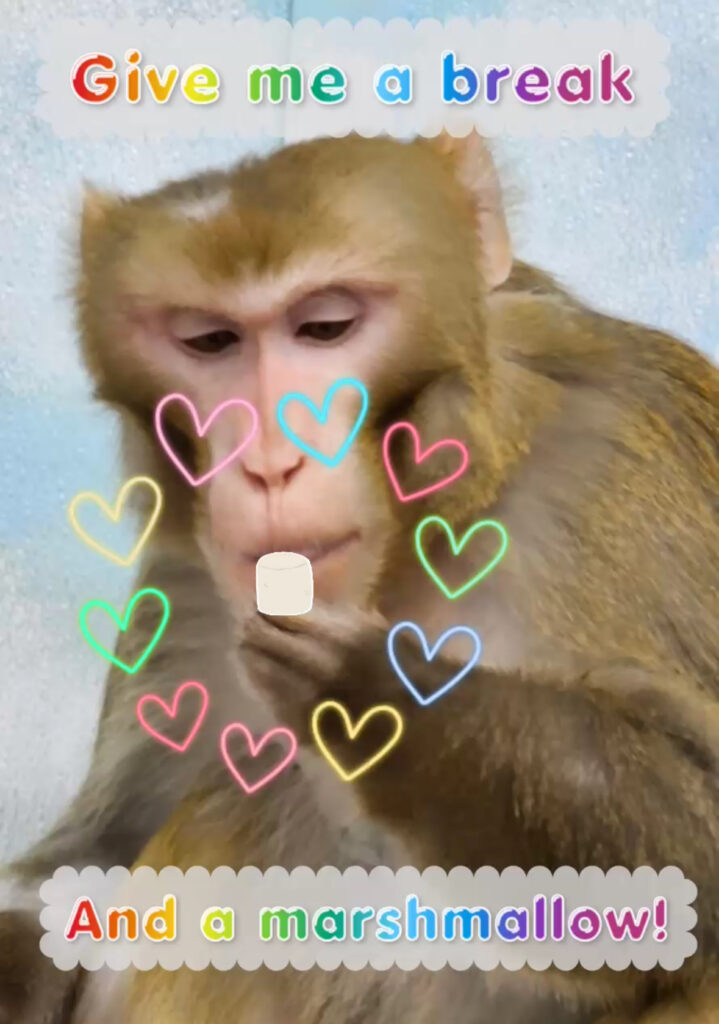
Their goal for the rest of their lives? Relaxing.
Many animals around the world spend their lives in research labs providing immeasurable contributions to the fields of science and human medicine for only one project. Agave and Saguaro, on the other hand, participated in research for multiple labs and expanded knowledge in various realms in only a few short years.
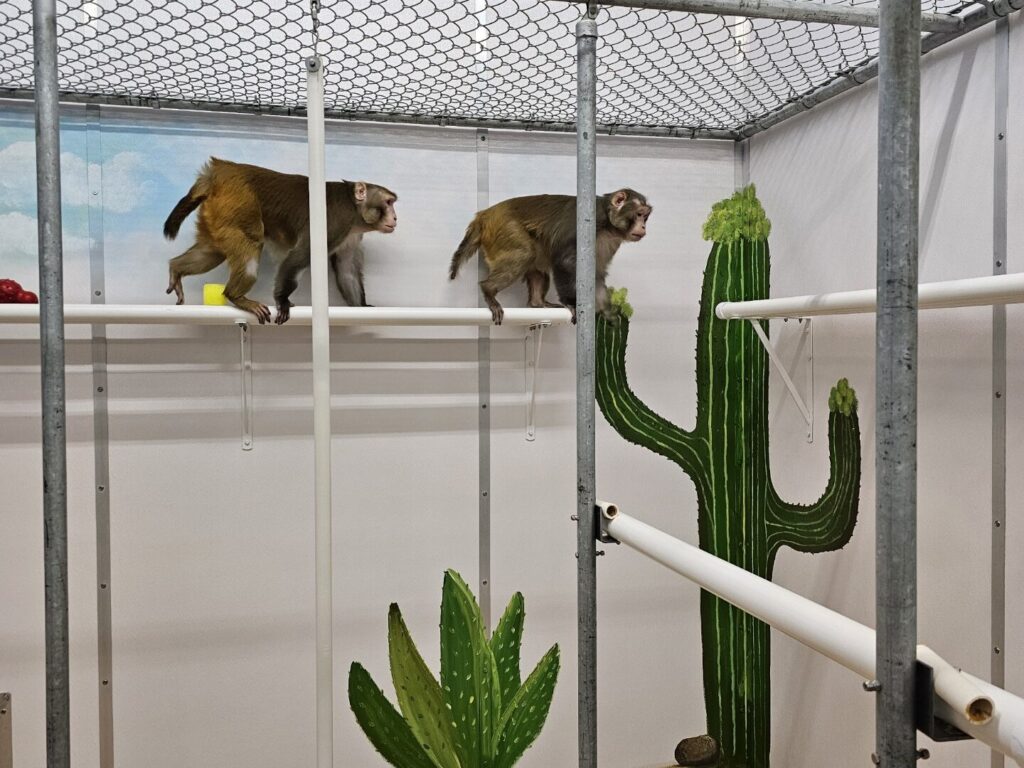
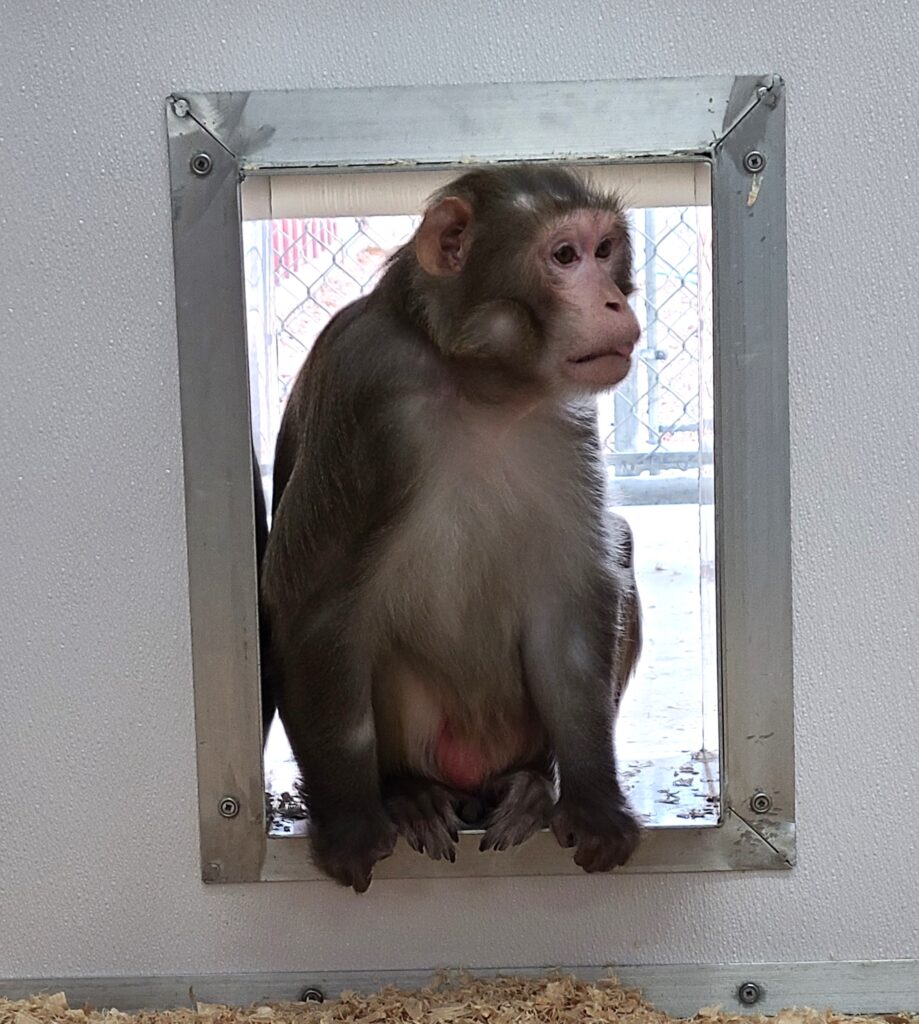
So, when electrophysiology ended on Agave and Saguaro, we sought a space that they could spend the rest of their lives in and settled on a USDA accredited sanctuary in the Pacific Northwest. Wide open green spaces, private rooms with all the toys they could want, and people with 30 years of experience caring for primates that were once in research or trafficked as pets.
What followed was a year-long effort to allow our monkeys the chance to retire as there was never a pair more deserving. Questions about transportation, health, safety, cost; each resolved one after the other, with a team of nearly twenty people working for these monkeys to get their chance.
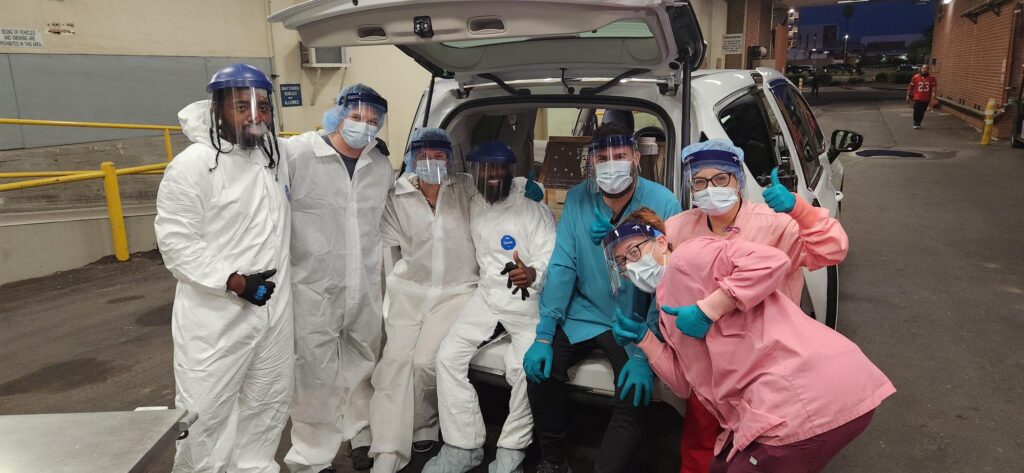
Finally at the end of July 2024, they reached their new home, and their room - painted with saguaros and agaves.
We will miss having Saguaro and Agave in our daily lives, but there is nothing better than seeing the joy of animals that you love having the time of their lives.
In the Gothard Lab, undergraduates have always been integrated into all aspects of research; they train the animals, collect and analyze data, and help plan follow-up experiments. Recently, part of our mission focus turned to improved training of our undergraduates to share their work with both the scientific and lay community, as we believe the scientists and doctors of the future need to be able to clearly explain complex ideas, answer questions, and share their enthusiasm for scientific research.
This was the motivation to start S.C.U.T. (Science Communication in Undergraduate Training). All undergraduates participated in weekly meetings where they were immersed in various projects, challenged to think critically, and explain their ideas in understandable ways. Under this format, students completed side projects of their own, a step further than what was usually completed under the wings of the graduate students. They analyzed data that was not previously processed for ongoing experiments and brought to light new valuable dimensions of the results.
After only four months of S.C.U.T., six of eleven undergraduate students in the lab were able to develop posters that reported new findings from our data and that without their work would have been left unattended. They carried out new analyses and discussed the new results in the context of everything else that these data yielded so far.
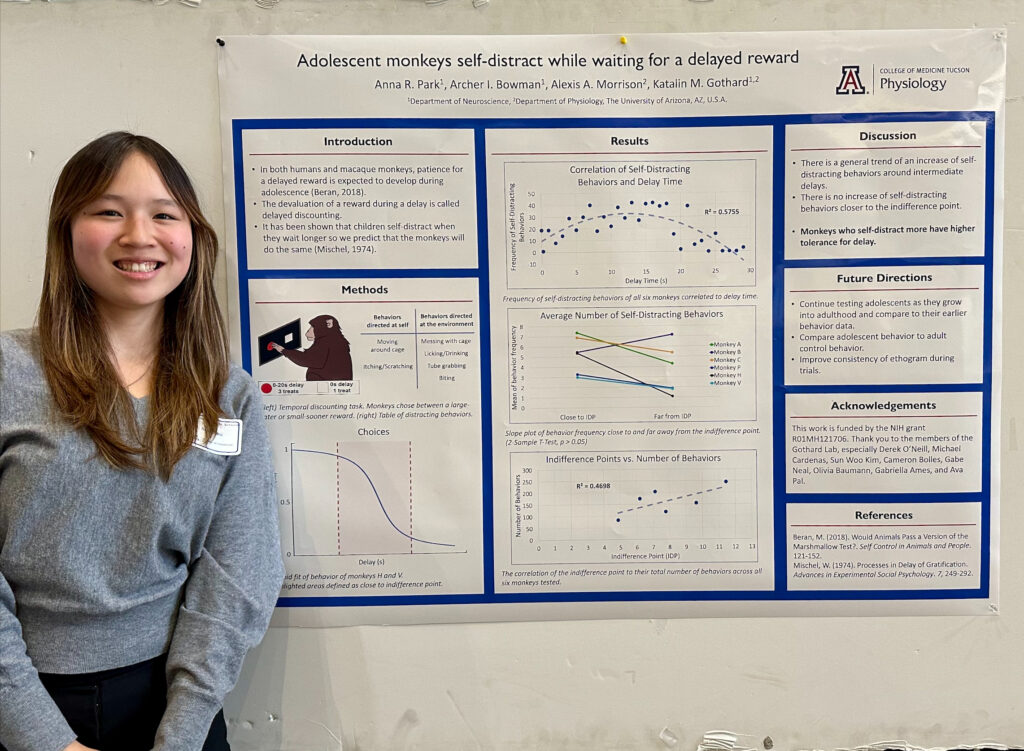
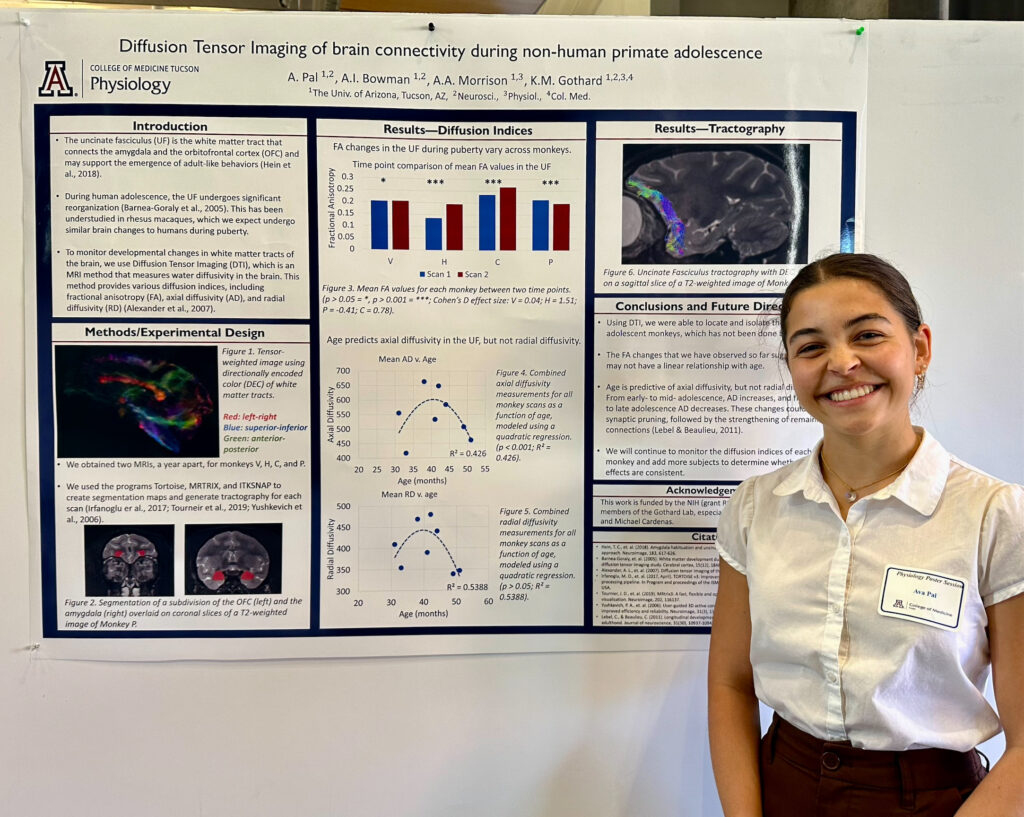
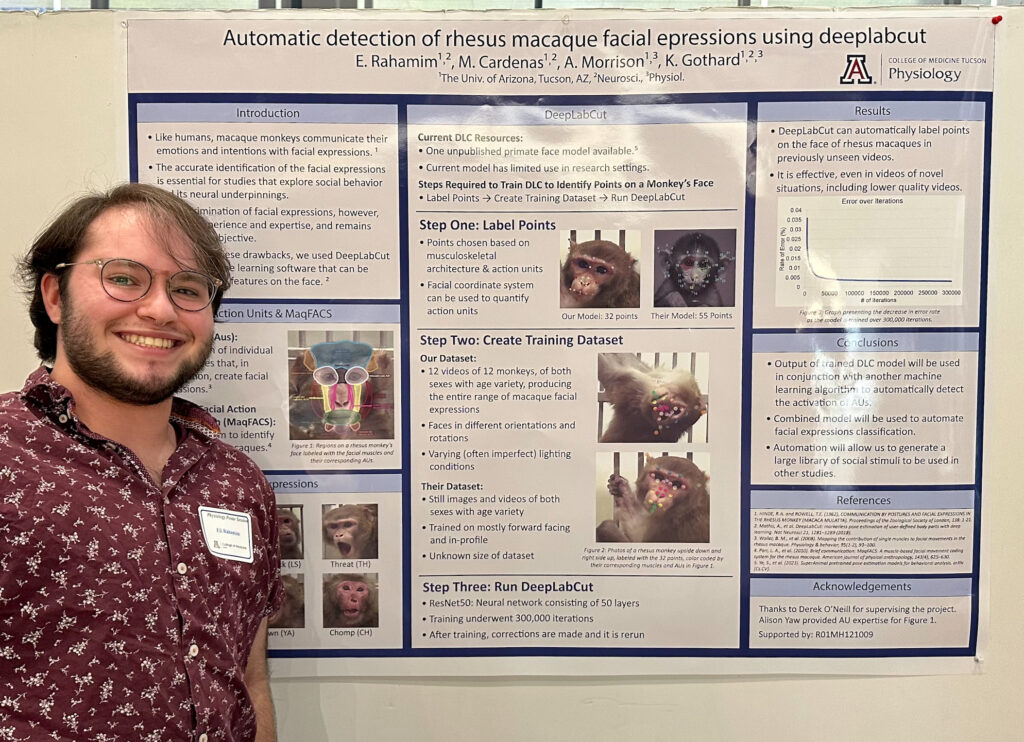
These posters went on to be presented at the Spring 2024 UofA Physiology Undergraduate Poster Session, where 13% of the posters came from the Gothard Lab. One student, senior Eli Rahamim, graduating this Spring with two B.S. degrees, one in Neuroscience and Cognitive Science and another in Psychological Sciences, headed a project focused on automating the process of labeling facial expressions of macaques using a program called DeepLabCut. His poster won the first place PSIO Poster Team Award for his poster’s visual appeal, clear explanations, and overall impressive work.
S.C.U.T. is here to stay, for the betterment of the students and the lab overall.
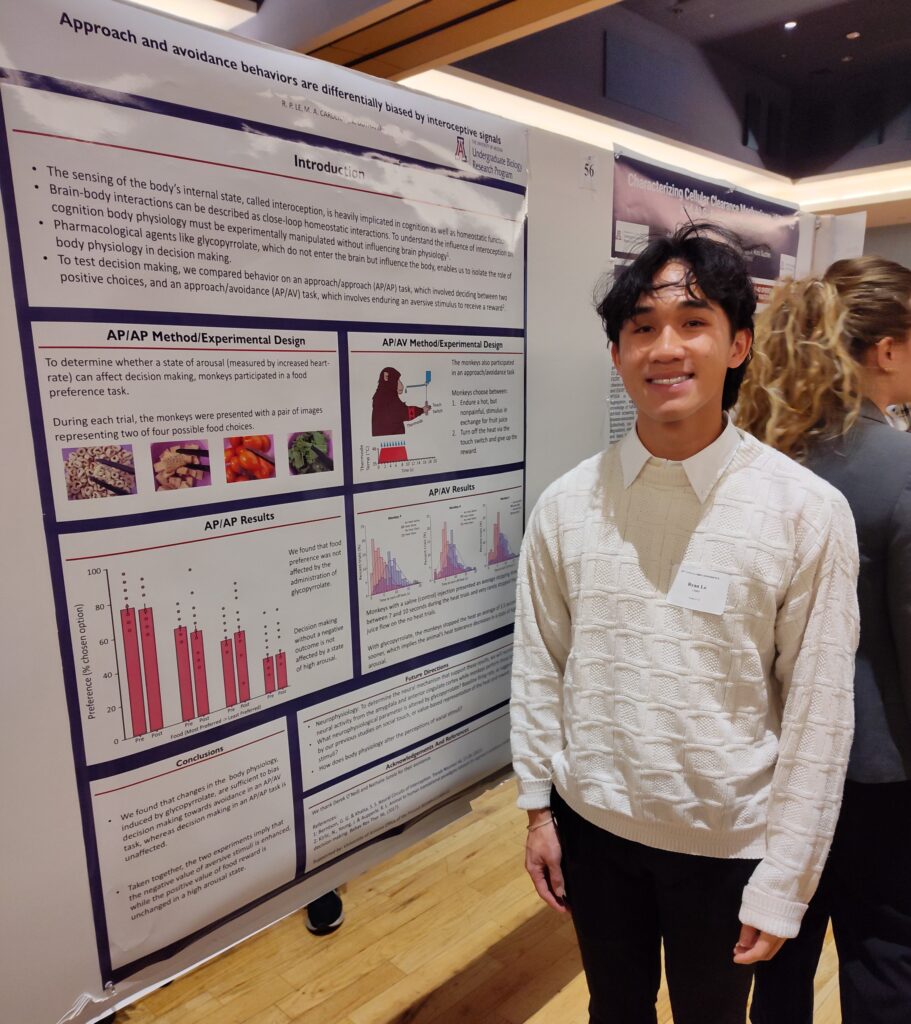
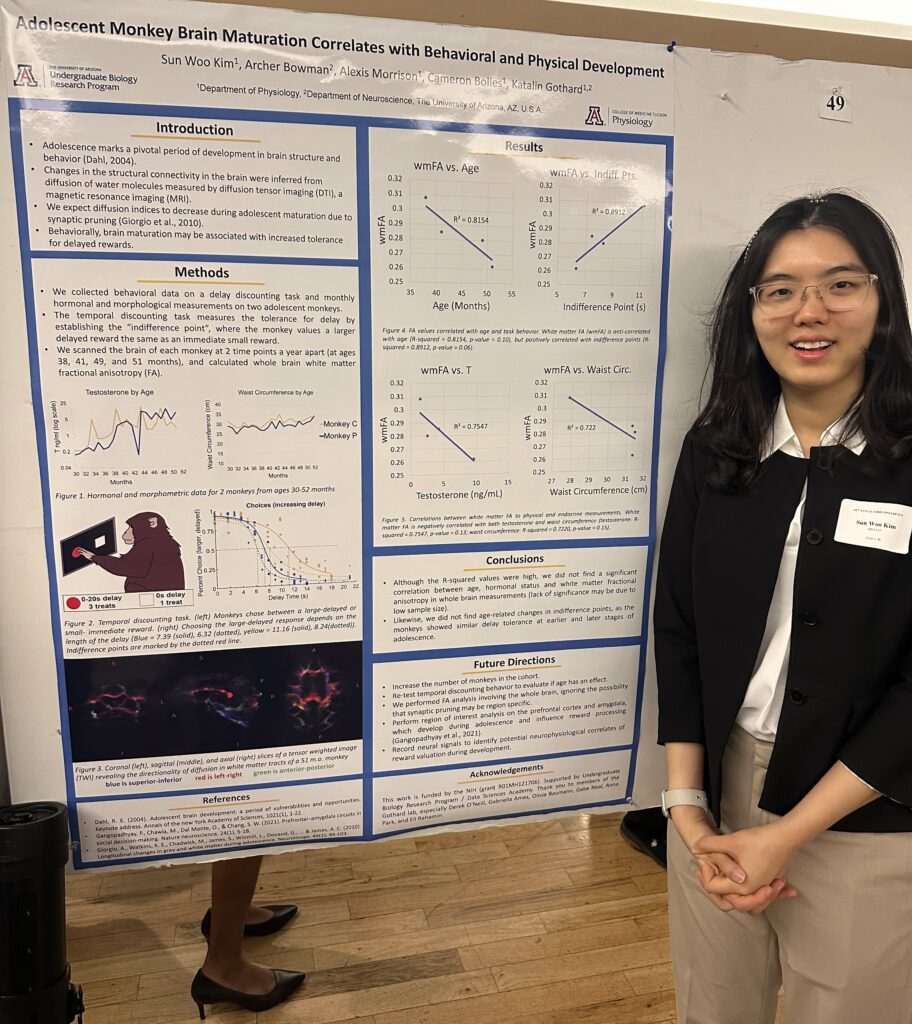
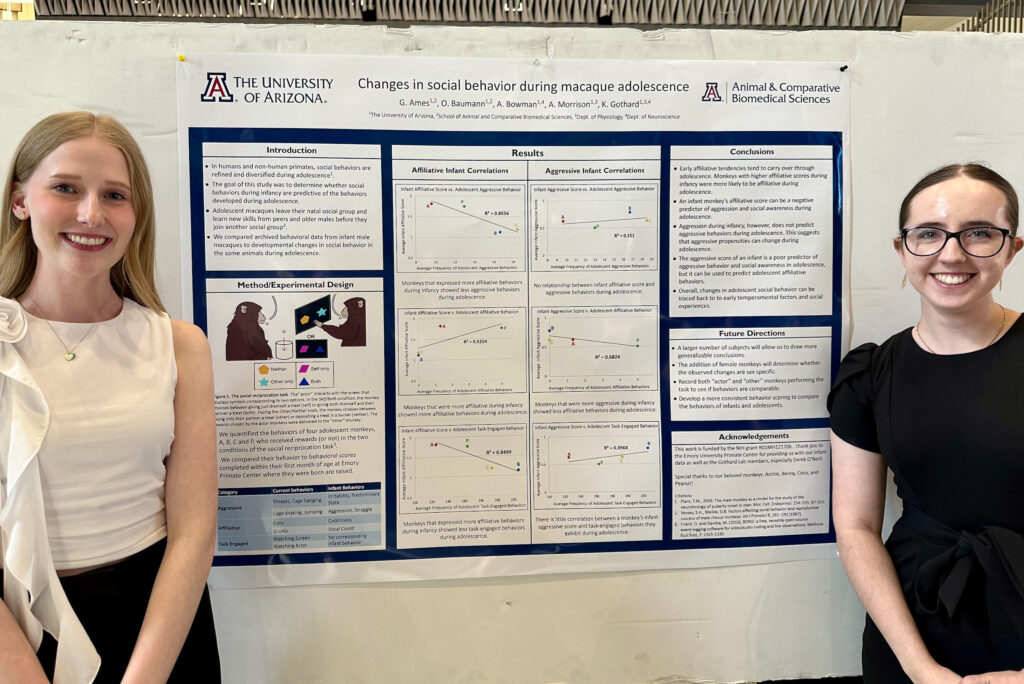
This past Saturday undergrad students Ryan Le and Sun Woo Kim presented a culmination of their past years research at the 35th Annual Undergraduate Biology Research Program (UBRP) Conference. Ryan’s first UBRP conference saw him describing how pharmacological manipulations affected tolerance to heat, something that all local Tucsonans could sympathize with, as part of a project studying interoception. Sun’s final UBRP conference as a senior provided her the opportunity to educate the general public on the brain and body changes over adolescence, and how these may relate to tolerance to delays.
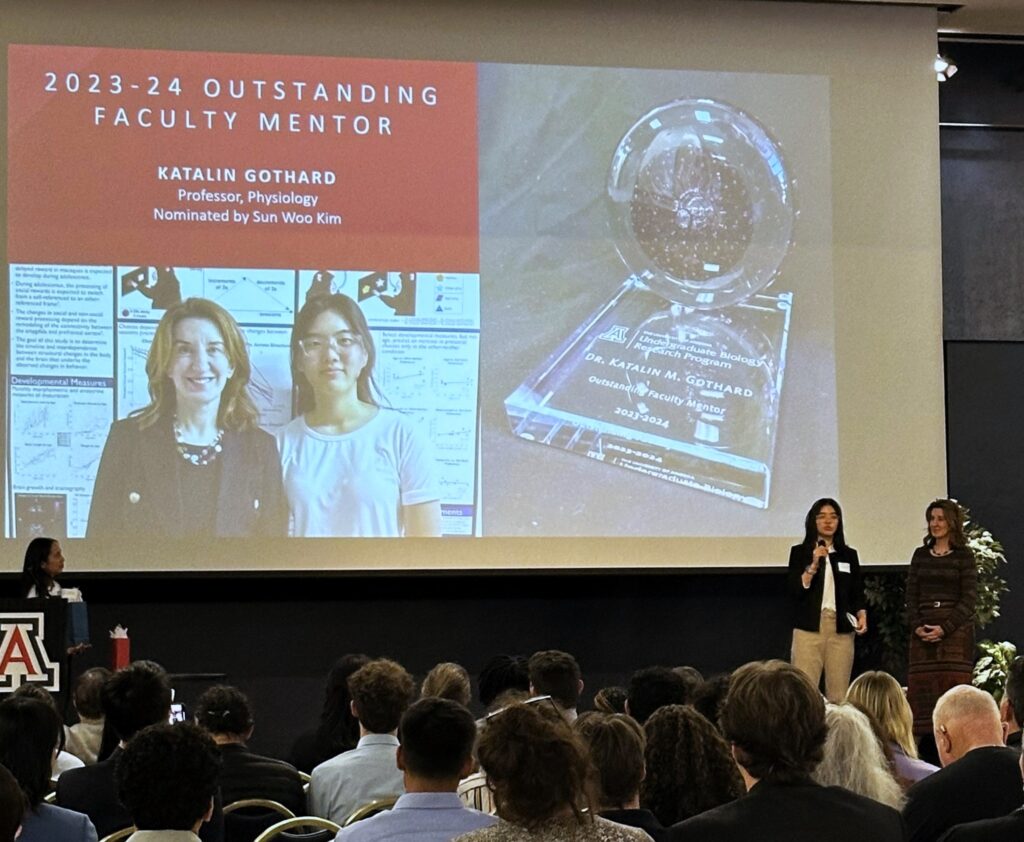
Not a dry eye remained in the conference after Dr. Gothard was celebrated as this year’s outstanding faculty mentor. Sun nominated Dr. Gothard after feeling she had grown up in the lab since her freshman year, and that through the guidance of her mentor she was able to reach her goals of medical school and applying to a PhD program.
Congratulations once again to our students and Kati for her continuous efforts in inspiring the next generation of scientists.
Congratulations to graduate student Michael Cardenas, who was selected by the organizers of the NIH Annual Investigator Meeting on Interoception Research (Washington DC, Nov. 11, 2023) to give a flash talk presentation! The selection of his abstract for oral presentation comes with a travel award to the conference. Michael will present his recent findings on behavioral changes in an approach-avoidance conflict task induced by interoceptive manipulations. These pharmacological manipulations selectively reduced parasympathetic drive on the viscera. Because these drugs do not cross the blood-brain barrier the most likely explanation for the significant shift in decision-making is a change in the interoceptive afferents that target the neural substrate of the ongoing behavior. This is a direct demonstration that changes in body physiology can significantly bias the cognitive processes that support complex decisions.
Spring is a time of change, both in nature and the Gothard lab. At the end of each academic year, the lab gets together to say farewell to students that are graduating and to welcome the new students that joined the lab over the past year. The spring of 2023 saw many undergraduate and graduate students start the next chapter of their lives. While it is sad to see them leave, it is exciting to see them becoming young scientists. The students spend years in the lab, learning how to work with the animals and how to conduct research. When they venture out into the world, they bring those skills with them but know that they can always contact the lab should they need any help or guidance. We wish them the best!
Departing Medical/Graduate students:
Rose Andersen, MD
Seunghyun Lee, PhD
Tess Champ, MS
Departing undergraduate students:
Tanusri Ganapathy
Chan Lim
Cam Bolles
Nick Lingenfelter
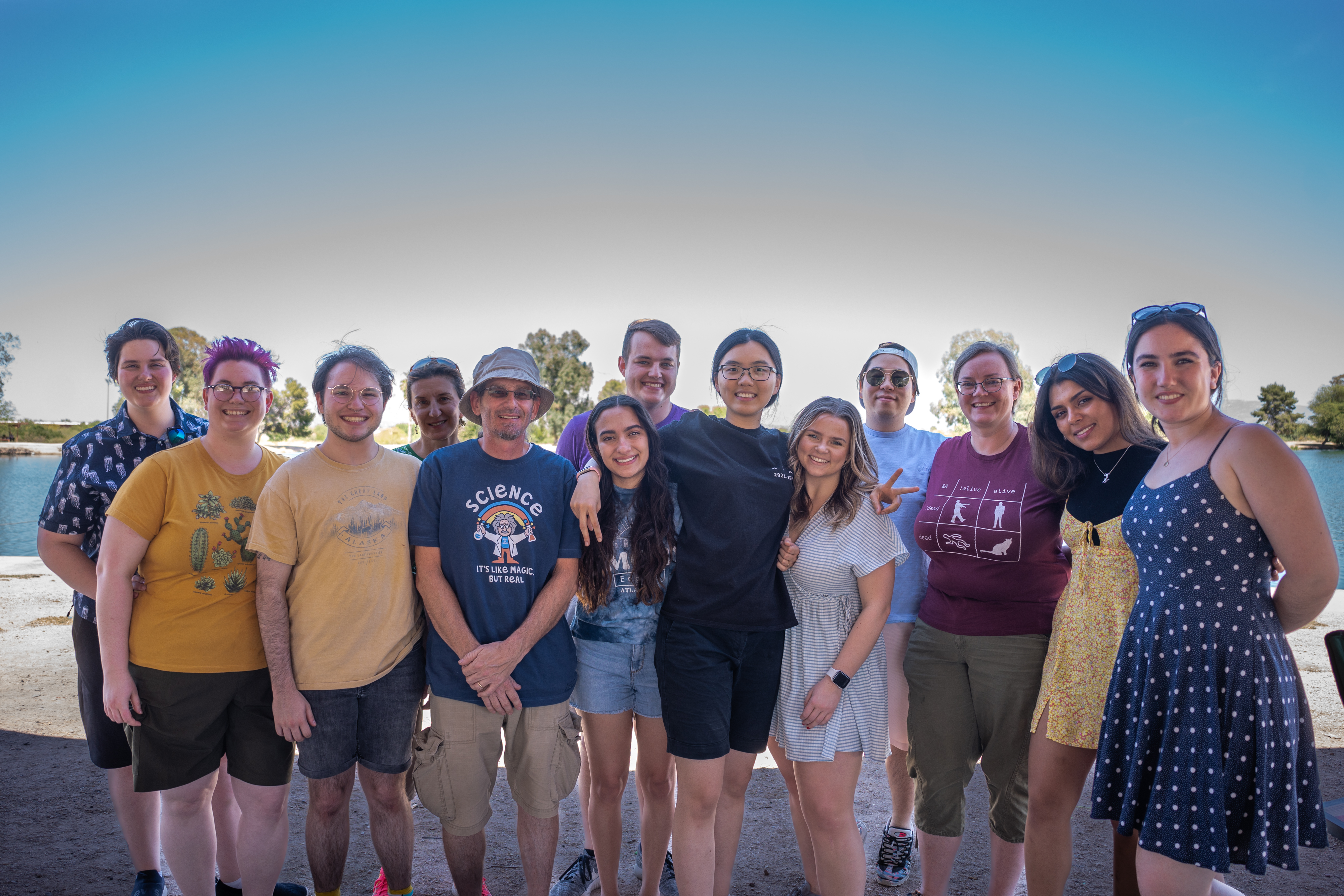
The Gothard Lab traveled to Christopher Columbus Park for a well-deserved break on the water. A sigh of relief is shared amongst the undergrads, who just finished the last of their final exams. For Berna Dennis and Natalia Magnusson, their sighs are understandably greater, as the weight of their undergraduate careers is finally off their shoulders.
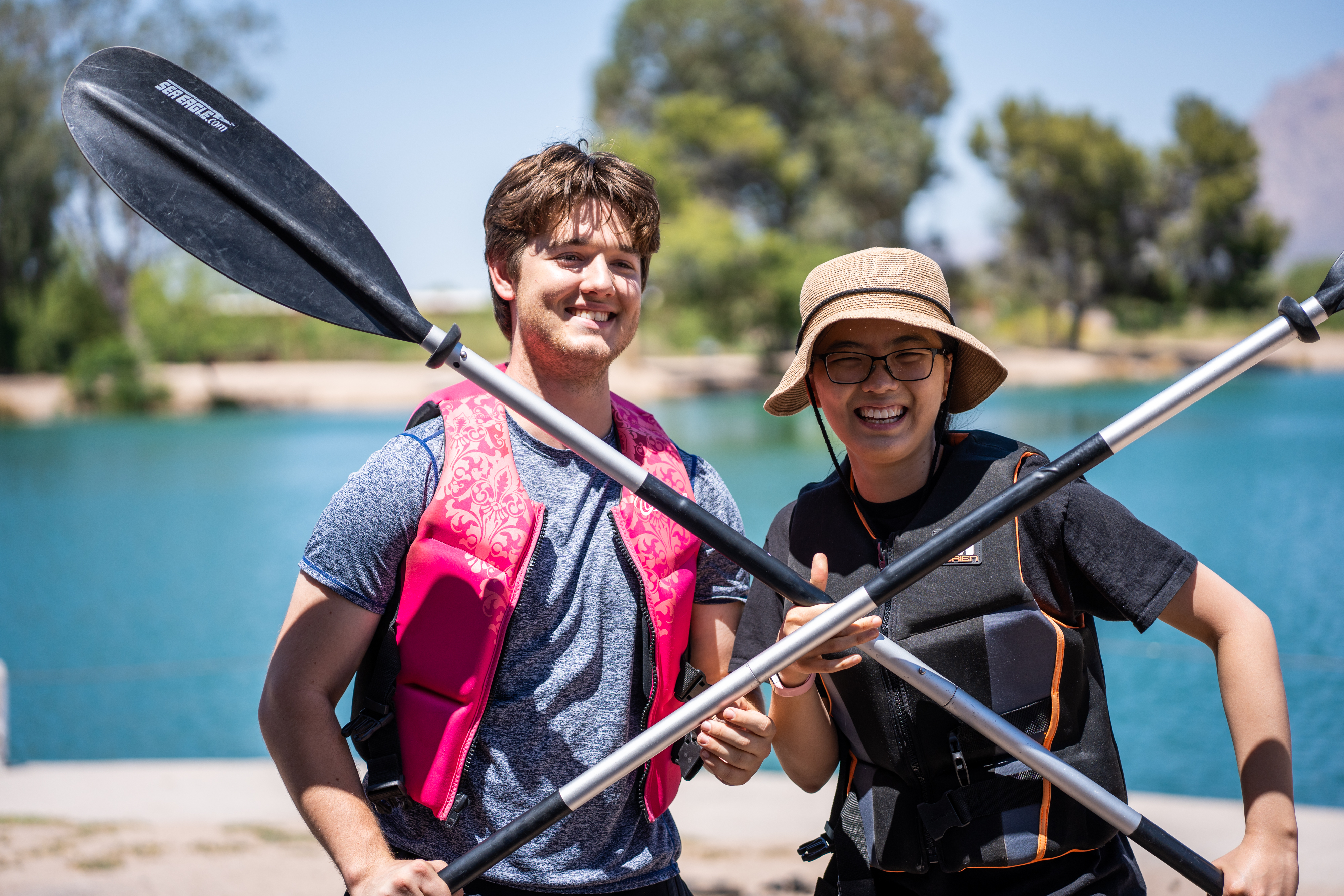
Natalia started her research experience earlier than most as an assistant in a bumble bee lab in high school. She joined the Gothard Lab as a undergraduate freshman and has spent every semester since as a valued and critical team member. She has been accepted into the PhD program at Emory University and will continue her education as well as her work with monkeys! Berna Dennis received news on her 21st birthday that she was accepted into a BSN-IH program in Gilbert, AZ. She joined her freshman year and has been an exceptional mentor for a plethora of undergraduates after her.
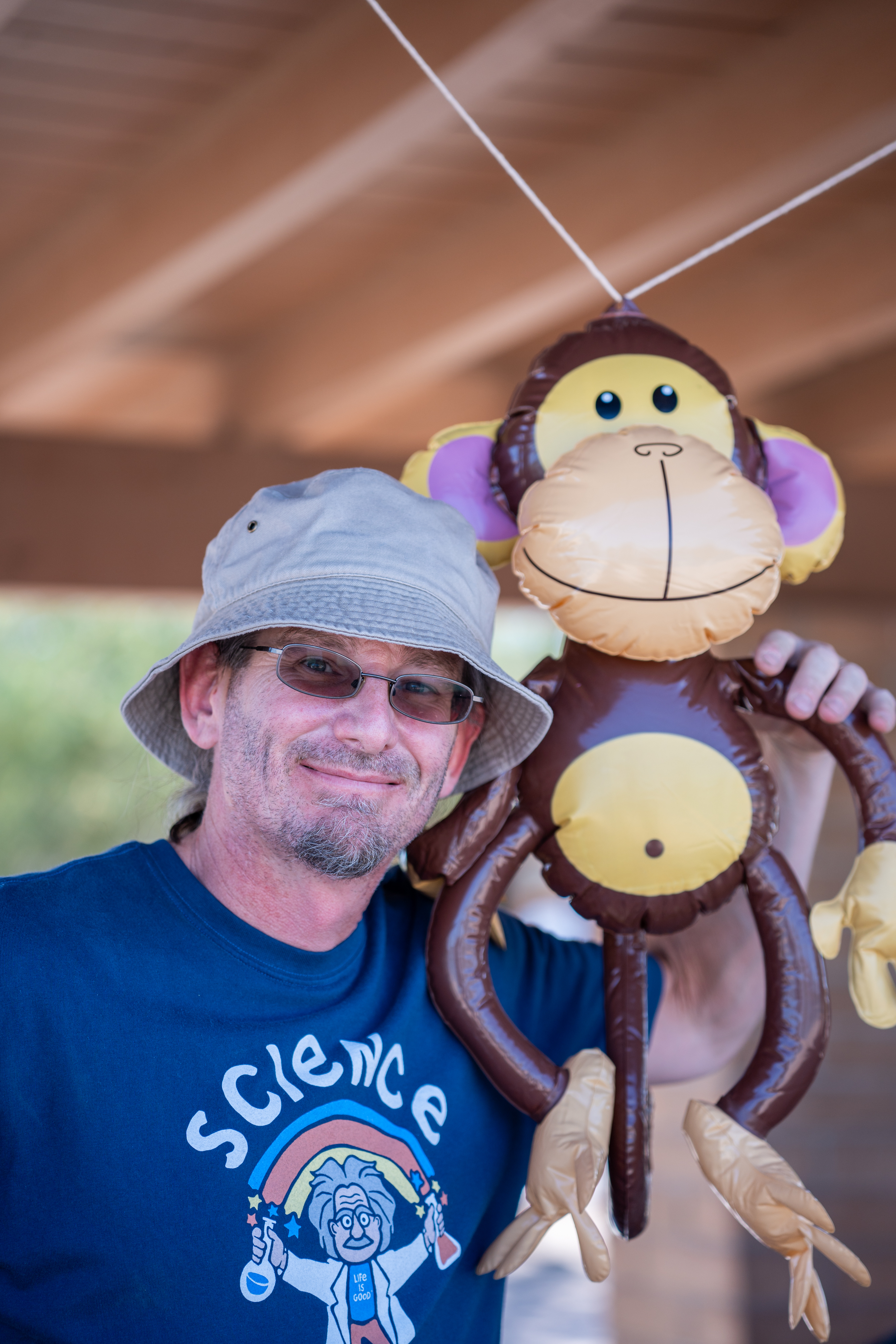
Local ducks were kind enough to provide security around the picnic tables as lab members ate, laughed, and enjoyed the afternoon. By some miracle, nobody fell in the water while kayaking and the corn hole remained somewhat civil.
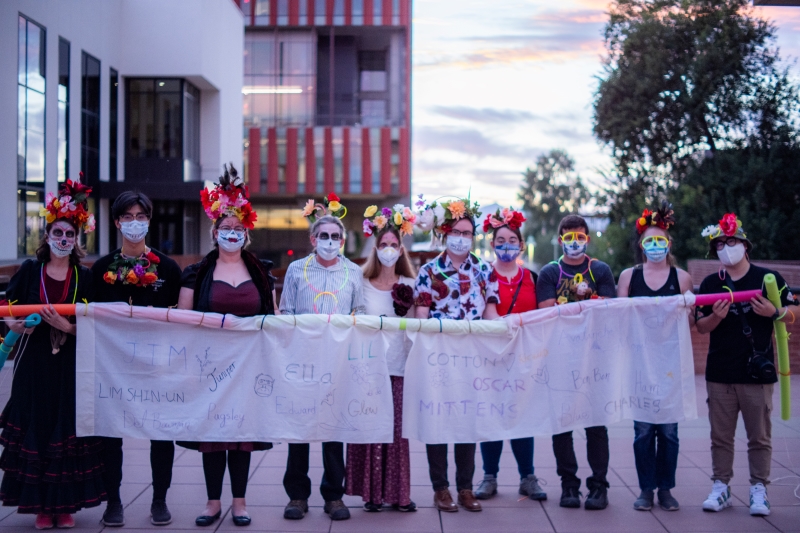
The All Souls Procession, in honor of Dia de Los Muertos, is a large and popular event in Tucson. It started in 1990 and has grown to a weekend long event with over 100,000 participants. It is a celebration and mourning of the lives of loved ones and ancestors. The procession is a two mile walk through the streets of Tucson culminating at a stage with live music and the burning of a large urn filled with the names of loved ones. Gothard lab members have participated in the procession in recent years by dressing up and making a banner. We will continue this tradition in the years to come.
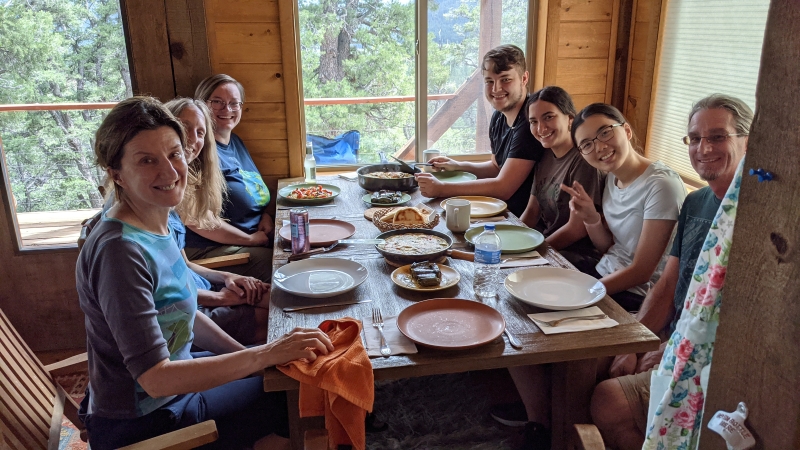
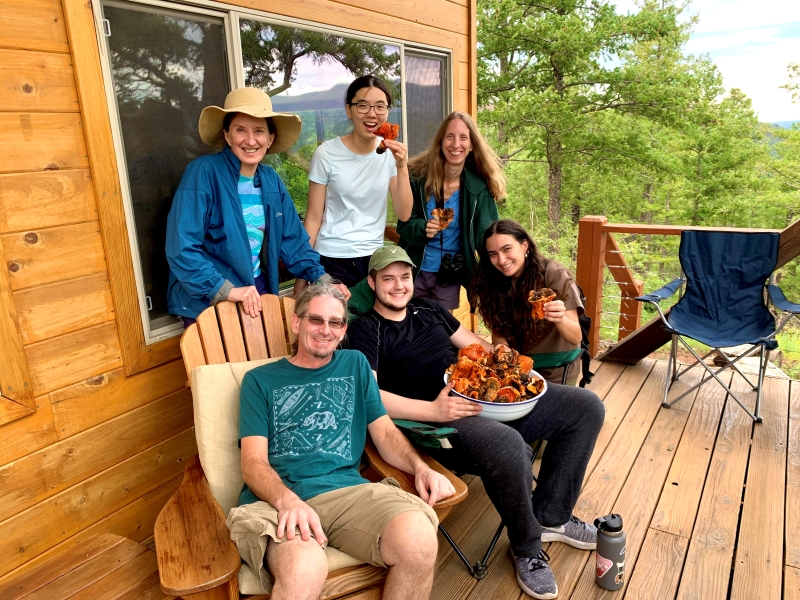
Over Labor Day, 2021, some of the lab members took a road trip to New Mexico for some relaxation and outdoor recreation. While we were there, we took a short trip to visit Dr. Gothard's cabin, in eastern Arizona, where we hiked through the forest and collected lobster mushrooms, which we ate for dinner.
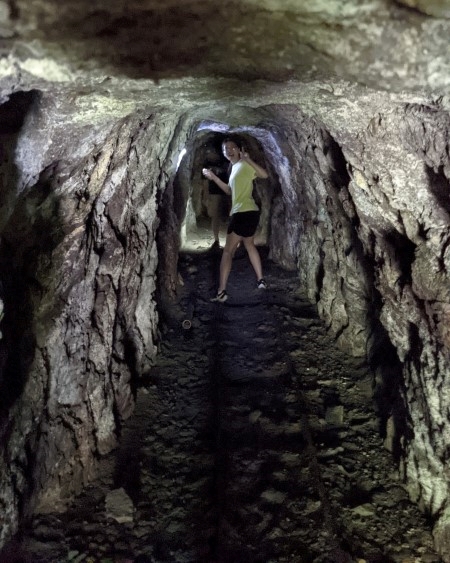
While in New Mexico, we visited the old mining town of Mogollon, where we had a picnic lunch next to a small creek. Nearby the creek was an abandoned mine shaft. Derek, being responsible for the safety of the lab, thought it would be a good idea to explore the old, dark, spooky, abandoned mine shaft. The ground inside consisted of very wet mud but we were able to shimmy our way along by stepping on the rusted out mine car tracks. We were only able to venture about 100ft into the tunnel before our passage was blocked by a roof collapse.
Disclaimer: No lab personnel were injured in the making of this lab outing, but a large number of mushrooms lost their lives.