The Talk Around Town is All Monkey
After a summer of intense data collection and analysis, the Gothard Lab has been presenting results at a variety of different conferences.
VISP Networking and Research Symposium
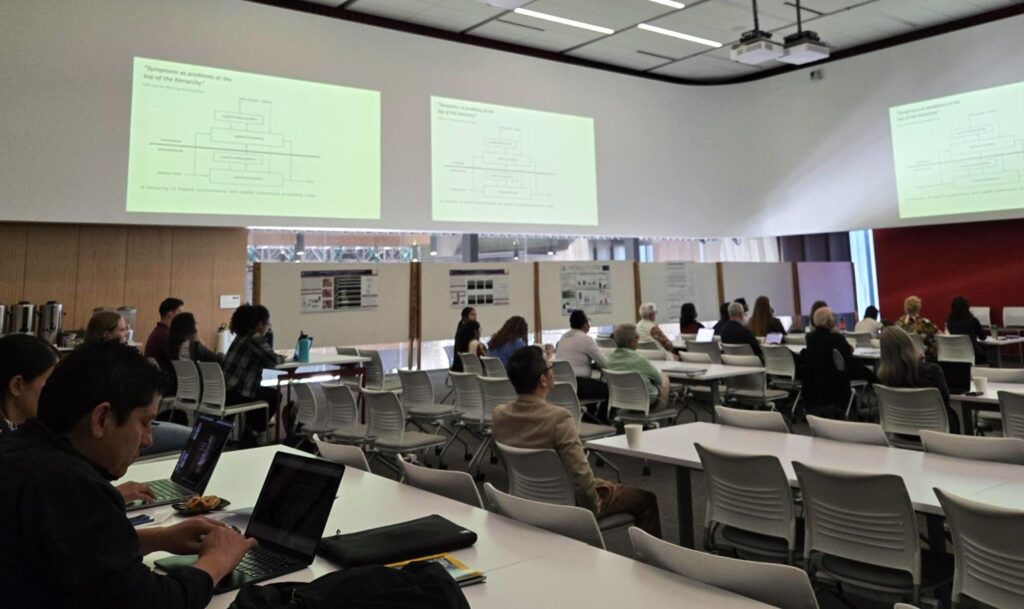
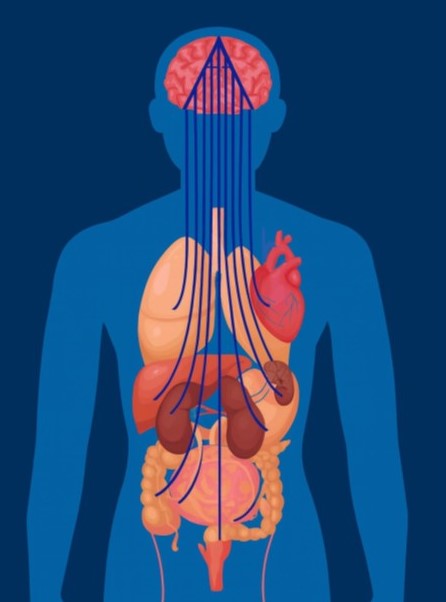
From the tail-end of the Gastronauts event at the University of Arizona, a new single-day conference emerged. On October 30th, the Program for Visceral & Interoceptive Systems Physiology (VISP) held its inaugural symposium. VISP Director and founding member, Dr. Katalin Gothard, organized a full day of networking and research presentations consisting of 10 talks by leading researchers in the field and 11 posters presented by University of Arizona students. Discussions spanned a wide array of topics from the urinary system to hormones to the brain. The goal of VISP is to evaluate how parts of the body interact and communicate to affect behaviors. Research was presented from top universities around the country, from animal models as small as mice, to as large as human beings.
Society for Neuroscience (SfN) Conference
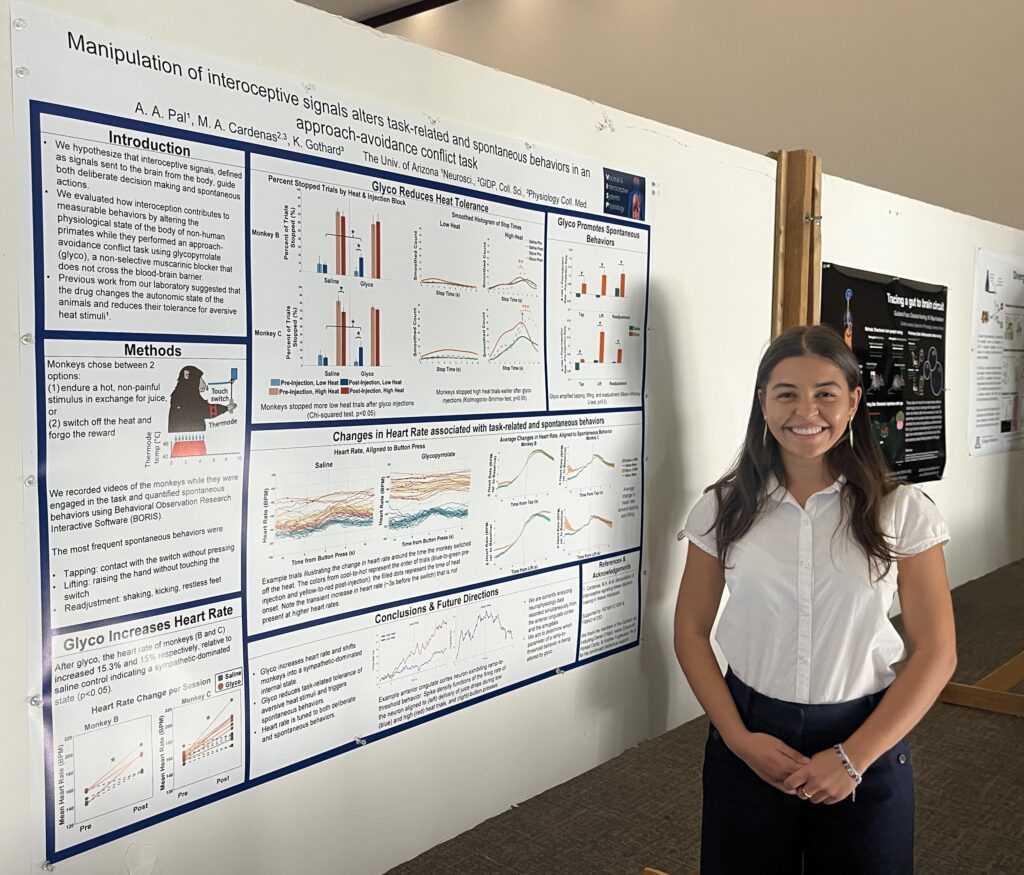
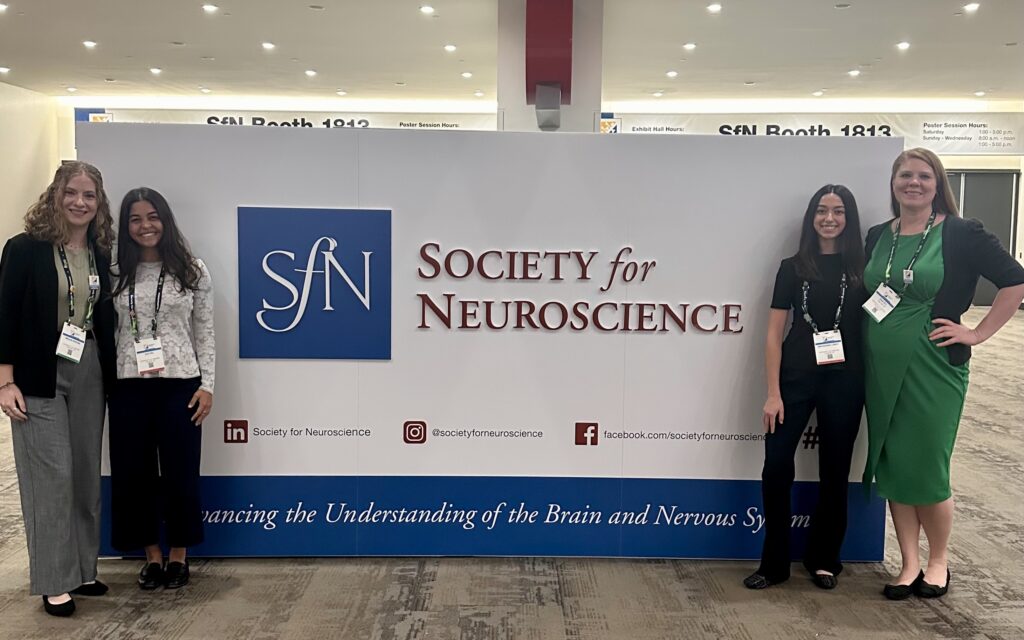
A first for some and a last for others, all staged in a chilly San Diego. This year, the Gothard Lab sent off two posters to the annual SfN conference; one presenting work from the Hierarchy team comprised of Megan Krause and Mackenzie Lynch, and continued work on interoception presented by Ava Pal.
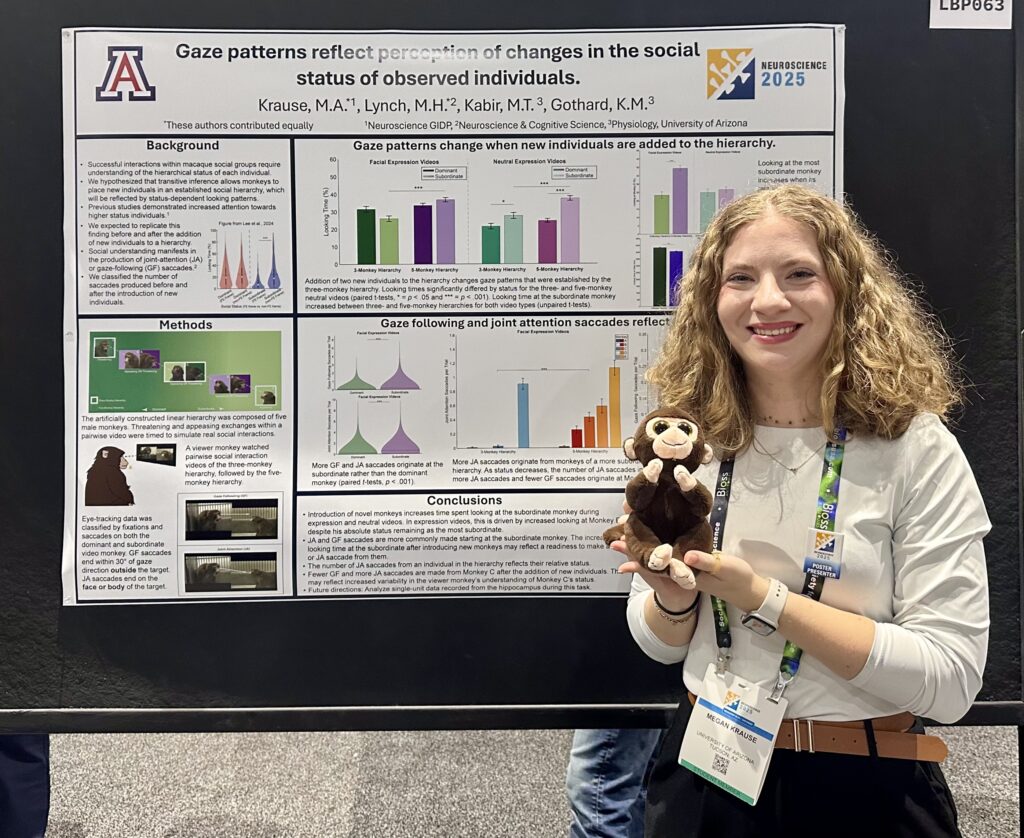
Megan Krause is a first timer at SfN in her new position as graduate student in the Gothard Lab. She presented the outcomes of her shared project with senior undergraduate Mackenzie Lynch. This was Mackenzie’s first and last time at SfN as an undergraduate student, after championing the creation and implementation of a new hierarchy project. Their poster examined changes in monkey looking behavior when new members were added to a known hierarchy.
Senior undergraduate Ava Pal completed her last presentation at SfN, and in her undergraduate career, prior to her graduation in December. She has been completing novel analysis on the behaviors monkeys exhibit during an approach-avoidance task and how these align with heart rate and neural firing.
U of A Student Research Day
Cameron Bolles began in the Gothard Lab as an undergraduate way back in 2021. Now, as an MD/PhD student at the U of A, he returned to complete his first rotation while also balancing the difficulties of med school.
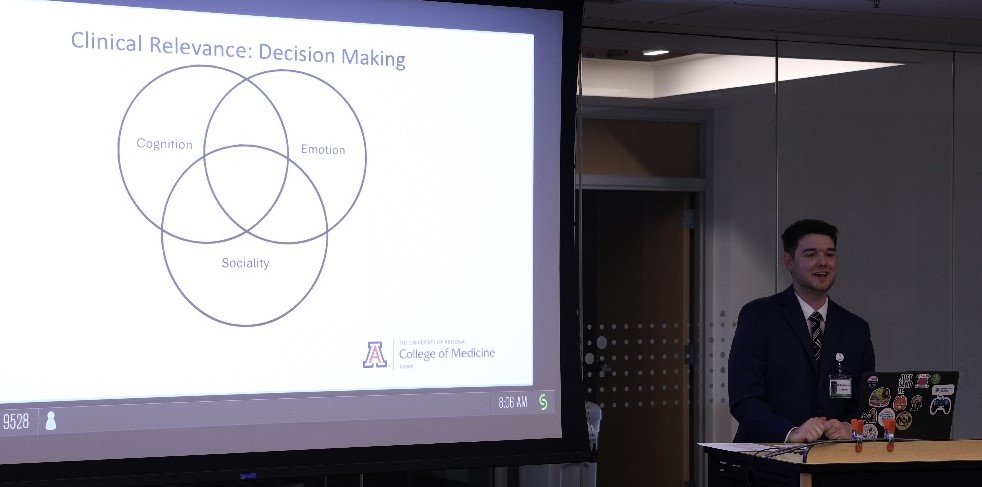
What started out as a four week project, evaluating monkeys’ performance on learning a Delayed Match to Sample task, has become a more thorough evaluation of how memory develops during a Non-Match to Sample Task when interoceptive signals are changed using pharmacological manipulations. The task is in early data collection and supported by many undergrads learning to work with monkeys for the first time.
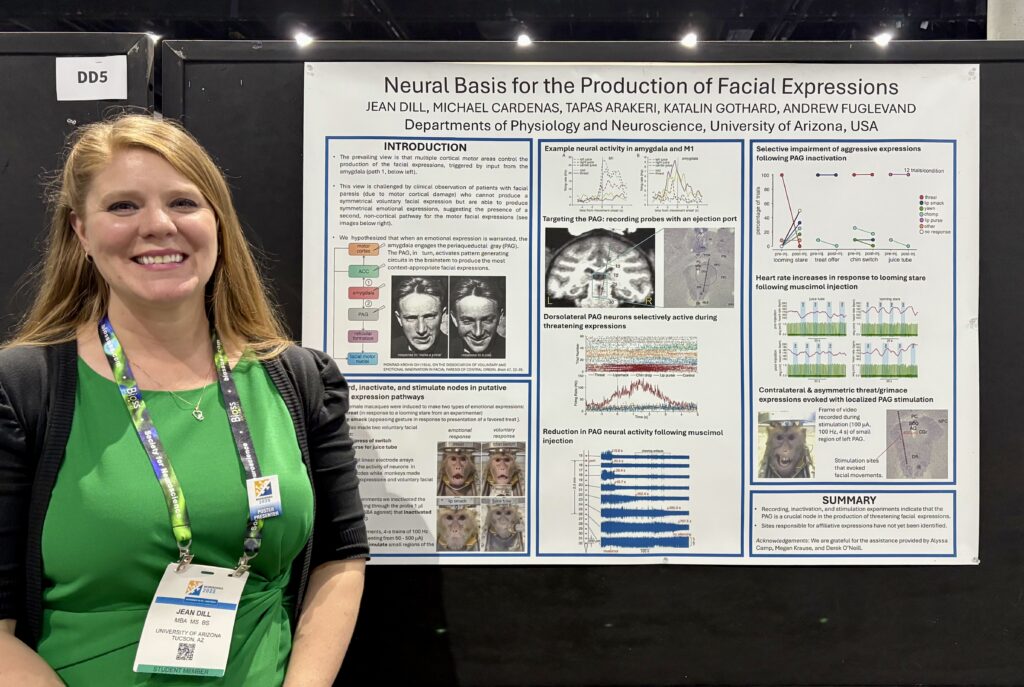
STAR Seminar Presentation: “Neural Basis of Facial Expressions”
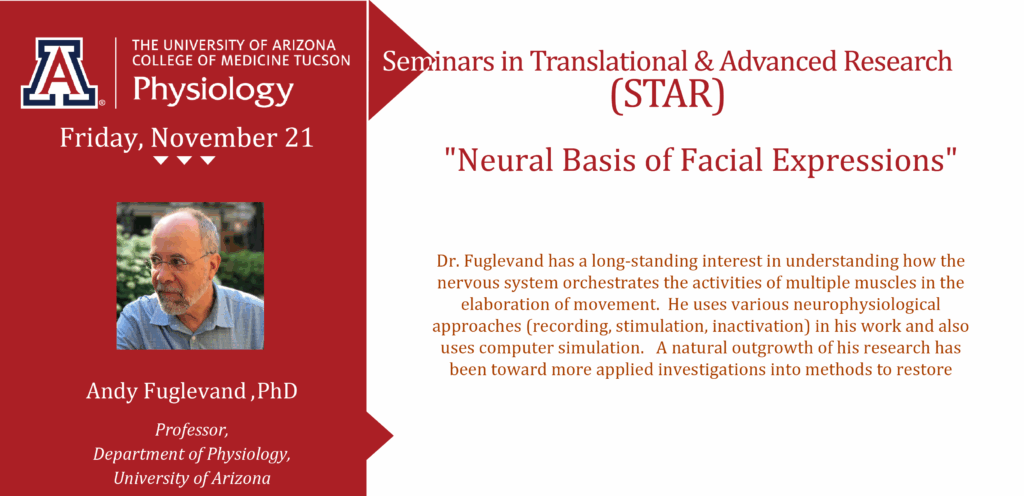
Long-time collaborator Dr. Andrew Fuglevand presented at the U of A Seminars in Translation & Advanced Research (STAR) in November. He has partnered with Dr. Gothard to investigate the pathways that control emotionally driven facial expressions This work involves recording from, inactivating, and stimulating several brain regions, including the Periaqueductal Gray (PAG), a region deep in the brainstem involved in other stereotyped innate behaviors.